

It usually starts with a hint — a funny taste, a dry mouth, or a friend subtly offering you gum a little too often.
Then you notice it yourself. You cover your mouth when you laugh. You double-check your breath before meetings. And no matter how often you brush or rinse, it feels like that bad breath just won’t go away.
If this sounds familiar, you’re not alone — and you’re not doing anything wrong.
Chronic bad breath, or halitosis, affects nearly 1 in 3 people. It’s not just a social issue — it can be a sign of something deeper happening in your mouth or body. And while mouthwash might mask the odor, real solutions begin with understanding why it’s happening.
In this blog, we’ll walk you through:
✅ What causes halitosis (hint: it’s not always about food)
✅ How dentists test and diagnose bad breath
✅ Which mouthwashes actually help — and which don’t
✅ When bad breath is a symptom of a deeper issue
✅ How to finally fix it — for good
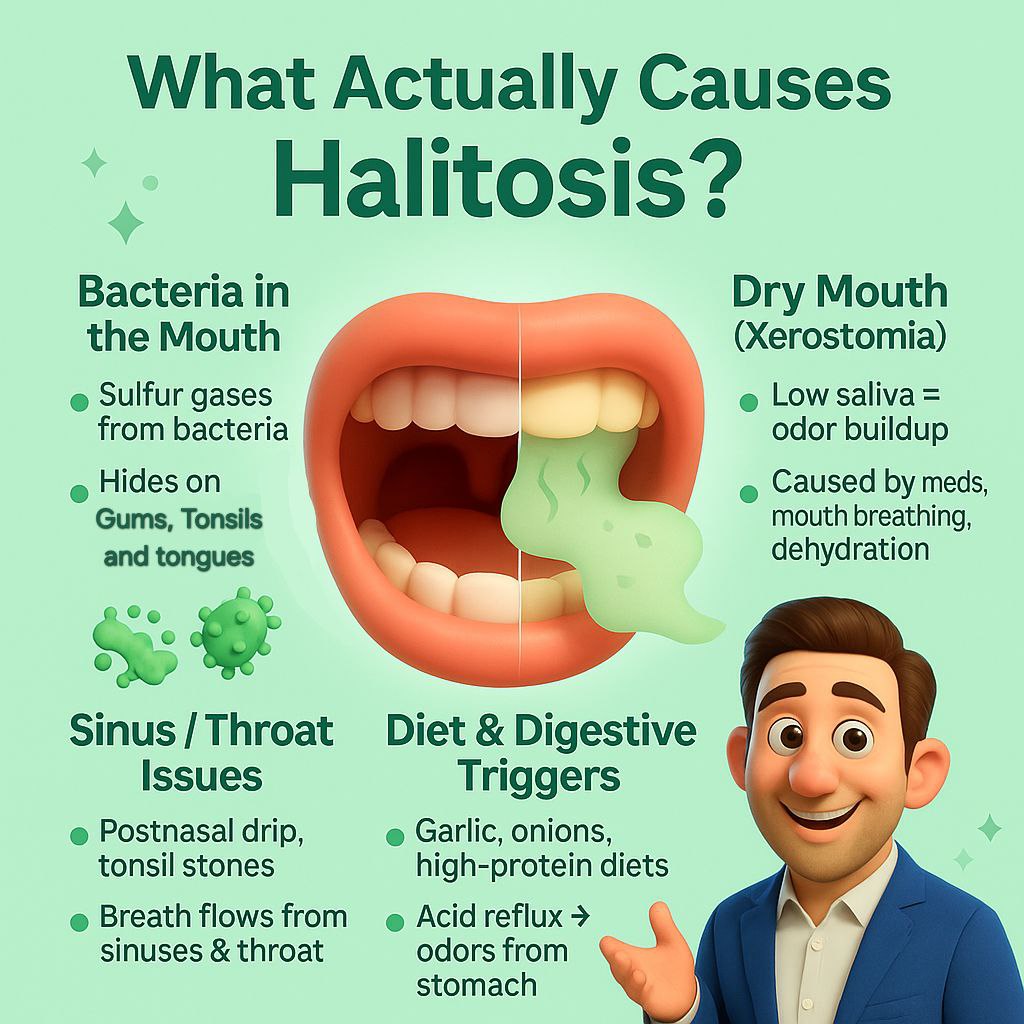
What Actually Causes Halitosis?
Let’s clear something up: bad breath is usually not about how often you brush — it’s about bacteria, saliva, and sometimes your sinuses or stomach.
Here are the most common causes of chronic halitosis:
🦠 Bacteria in the Mouth
The biggest culprit behind bad breath is volatile sulfur compounds (VSCs), created when anaerobic bacteria break down proteins in your mouth.
These bacteria love to hide in:
-
Deep gum pockets
-
The back of your tongue
-
Tonsil crypts
-
Between teeth where plaque builds up
They produce sulfur-rich gases like:
-
Hydrogen sulfide (smells like rotten eggs)
-
Methyl mercaptan (similar to rotting cabbage)
-
Dimethyl sulfide (a sweet, decaying odor)
💦 Dry Mouth (Xerostomia)
Saliva is your body’s natural mouth rinse. It washes away food particles, neutralizes acids, and keeps odor-causing bacteria under control.
If your mouth is often dry, odor builds up quickly. Common causes include:
-
Medications (especially antidepressants, antihistamines)
-
Dehydration
-
Mouth breathing (especially during sleep)
-
Smoking or vaping
-
Autoimmune conditions like Sjögren’s syndrome
🤧 Sinus or Throat Issues
Your breath doesn’t just come from your mouth — it flows from your sinuses and throat too.
Postnasal drip from allergies or sinus infections feeds bacteria in the throat. Tonsilloliths (tonsil stones) are another sneaky source — these calcified bits of food and bacteria in your tonsil crevices can release a foul smell when disturbed.
🍽️ Diet and Digestive Triggers
Some foods contain sulfur compounds that can linger for hours — even days — after digestion. Garlic, onions, and high-protein diets are major offenders.
Acid reflux can also contribute to breath odor, especially when stomach acid rises up into the esophagus or mouth.
Can Mouthwash Cure Bad Breath?
Not all mouthwashes are created equal. And unfortunately, most over-the-counter rinses only mask odors temporarily without solving the root issue.
❌ Avoid:
-
Alcohol-based rinses: They can dry out your mouth, making the problem worse.
-
Sweet or flavored rinses: Sugar feeds bacteria.
✅ Look for active ingredients like:
-
Zinc lactate or zinc gluconate: Neutralizes sulfur gases
-
Cetylpyridinium chloride (CPC): Kills anaerobic bacteria
-
Chlorhexidine (in prescription rinses): Reduces plaque and gingivitis bacteria
-
Essential oils (e.g., thymol, eucalyptol): Natural antiseptics
Pro tip: Zinc + CPC combinations have been shown to reduce bad breath by over 50% for several hours after use. But for long-term relief, mouthwash needs to be paired with a professional cleaning and tongue care.

How Dentists Actually Diagnose Bad Breath
Think your dentist just sniffs and guesses? Nope. Modern dental offices use high-tech diagnostic tools to find the exact source of your halitosis.
🧪 Sulfide-Meter Testing (OralChroma™ or Halimeter)
These machines analyze the levels of different sulfur gases in your breath. They give a reading that helps pinpoint whether the odor is coming from bacteria in the mouth, sinus issues, or deeper in the body.
👃 Organoleptic Test
A trained dental professional smells the breath at different distances and scores the intensity on a 0–5 scale. It might sound unscientific — but when done correctly, it’s still one of the most reliable methods.
📋 Full Oral Exam
Your dentist will also check for:
-
Plaque and tartar buildup
-
Deep gum pockets (signs of gum disease)
-
Tongue coating
-
Tonsil stones
-
Signs of dry mouth
-
Signs of acid erosion or reflux
What Are the Best Ways to Get Rid of Bad Breath for Good?
1. Professional Dental Cleaning
If bacteria and plaque are the problem, nothing beats a thorough, professional cleaning — including under the gums and around the tongue.
Even one session can dramatically reduce odor.
Some practices offer full-mouth disinfection, combining scaling, antibacterial rinses, and even light-activated therapy to remove bacteria deep in the tissue.
2. Tongue Scraping (Daily!)
The back of your tongue is often the worst offender.
Using a copper or stainless steel tongue scraper once a day removes bacteria and dead cells that brushing misses. Studies show it can reduce sulfur gas levels by 42%.
3. Hydration and Saliva Support
Sip water throughout the day, especially if you take medications or breathe through your mouth.
Try chewing sugar-free gum with xylitol to stimulate saliva. For dry mouth relief, products like Biotène gel or ACT Dry Mouth lozenges can help keep your mouth moist.
4. Treat Sinus or Throat Issues
If your halitosis comes from sinus infections or tonsil stones:
-
Use saline rinses or a neti pot to flush out postnasal drip
-
Talk to an ENT about chronic tonsillitis or allergies
-
Ask your dentist to examine your tonsils during routine visits
5. Diet Adjustments
Avoid sulfur-heavy foods like garlic, onions, and too much red meat if you notice lingering odor.
Try increasing water-rich foods like celery, cucumbers, and leafy greens — they help clean the mouth and promote healthy pH balance.
6. Use the Right Rinse
A zinc- and CPC-based mouthwash used twice daily — along with brushing, flossing, and tongue scraping — can help keep odor-causing bacteria at bay.
Reminder: These work best in combination. No rinse alone can fix the problem if there’s still plaque buildup or tongue debris present.
When Bad Breath Is a Sign of Something More Serious
If your breath doesn’t improve after dental cleaning, tongue care, and a solid oral hygiene routine, your dentist may recommend exploring:
-
Gastrointestinal issues (like reflux or H. pylori infection)
-
Liver or kidney disease (which can release certain breath markers)
-
Metabolic conditions (like uncontrolled diabetes, which may create a sweet or fruity smell)
In these cases, your dentist may refer you to a physician for further testing.
Real Talk: You Don’t Have to Feel Embarrassed
We know halitosis can be emotional. It affects your confidence, your relationships, and sometimes your willingness to even see a dentist.
But we promise: you’re not the only one, and your situation isn’t hopeless.
At our Boston dental office, we take a judgment-free, science-backed approach to bad breath treatment. We offer:
-
Full diagnostic testing
-
Gentle cleanings
-
Breath-specific treatment plans
-
Sedation options for patients with anxiety
-
Personalized hygiene coaching
📍 Located near Boston? Book a fresh-breath consultation with Dr. Sutera → [link in bio]
Summary: How to Fix Bad Breath for Good
✅ Identify the source — not all bad breath is dental
✅ Use a tongue scraper and anti-bacterial mouth rinse daily
✅ Get professional cleanings to remove plaque and tartar
✅ Treat dry mouth, sinus issues, and diet triggers
✅ Don’t wait — bad breath is manageable with the right care
💬 Got a question about bad breath or halitosis remedies?
Leave it in the comments — we’re here to help, no judgment.
📍 In the Boston area? Book your fresh breath consultation with Dr. Sutera today.
🔔 Subscribe to my YouTube Channel for trusted answers to your biggest dental questions — from cleanings to smile makeovers.
