
As a Boston cosmetic dentist specializing in smile makeovers, I get asked almost daily: “Can you whiten crowns, or veneers, or old fillings the same way you whiten your natural teeth?”
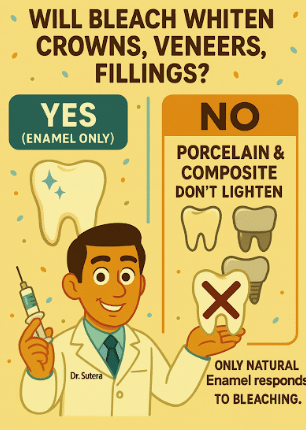
The short answer? Traditional bleaching will not lighten porcelain, ceramic, or composite dental work. But don’t worry — there are safe, effective ways to refresh discolored crowns, veneers, and fillings so your entire smile stays bright and beautiful.
Your natural teeth respond beautifully to whitening—but that old fillings, crowns, or veneers don’t budge. This is one of the biggest surprises patients run into when they want a brighter, more youthful smile.
In this ultimate guide, you’ll learn:
✅ Why bleaching doesn’t whiten crowns or veneers
✅ What to do if your old dental work looks dull or stained
✅ Costs in Boston for replacing or polishing restorations
✅ Long-term care to keep your restorations white
✅ Tips to plan whitening before crowns or veneers — for the perfect color match
✅ Real answers to common questions from patients just like you
Why Won’t Whitening Work on Dental Restorations?
Let’s start with the science.
Your natural teeth have tiny microscopic pores in the enamel. Professional whitening treatments — whether done in-office or with custom trays — use hydrogen peroxide or carbamide peroxide to penetrate these pores and break up stains.
✅ Porcelain crowns and veneers are different. Porcelain and advanced ceramics are non-porous and chemically stable. They’re designed not to absorb color or bleaching agents. Once the porcelain is fired and glazed in the lab, it stays at the color it was made — for better or worse!
✅ Tooth-colored fillings (composite resin) don’t lighten either. Composite resin is a synthetic material. It’s color-matched to your natural tooth at the time of placement but does not respond to whitening agents.
✅ What happens instead? If you whiten your teeth, your natural enamel lightens — but your old fillings or crowns stay the same color. This mismatch can make your dental work stand out instead of blending seamlessly.
So, if you’ve asked “Can I bleach crowns or whiten veneers at home?” — the honest answer is no. But here’s the good news: you don’t have to live with mismatched shades. With the right approach, you can refresh or replace your dental restorations for a whiter, more uniform smile.

How Do You Refresh Discolored Crowns, Fillings, or Veneers?
When patients come in wanting to whiten crowns veneers or fix stained fillings, I walk them through three main options:
✅ 1. Professional Polishing: Best for Light Surface Stains
Sometimes old crowns or veneers look dull because they’ve picked up surface stains — coffee, tea, wine, or even tobacco can build up tiny surface debris that regular brushing can’t remove.
In this case, your hygienist or dentist can gently polish the restoration with a special non-abrasive paste and rubber polishing cups. This can remove light stains and restore the smooth, shiny glaze you once had.
When does polishing work?
-
Light yellowing or mild staining
-
No deep cracks or underlying discoloration
-
You’re happy with the shape and fit of your crown or veneer
Cost?
In Boston, polishing is often included in your routine hygiene visits — no extra charge. If deeper professional stain removal is needed, a specialized polishing session might run $75–$150.
✅ 2. Replacement: Needed for Deep or Internal Discoloration
Sometimes stains go deeper. Porcelain or resin can develop internal discoloration if the underlying tooth darkens, the cement line leaks, or the glaze wears away over many years.
In these cases, whitening crowns veneers with polish alone won’t help. Replacement is the best option to restore your smile’s uniform color.
When replacement makes sense:
-
Dark line near the gum line
-
Crown or veneer no longer fits well
-
Visible cracks or chips
-
You want a whiter smile overall — but the crown doesn’t match
Typical Boston costs:
-
Porcelain crown: $1,300–$2,000 per tooth
-
Porcelain veneer: $1,200–$2,000 per tooth
-
Tooth-colored filling replacement: $150–$500 per tooth
Keep in mind: the new crown or veneer is custom matched to your natural teeth. If you’re planning to whiten your teeth, do the whitening before you replace old dental work.
✅ 3. Whiten Your Teeth First — Then Replace Restorations
If you have multiple crowns or veneers that no longer match your natural teeth, it’s best to whiten your natural teeth first — then replace your restorations.
Why? Because your dentist needs to match the new crown or veneer to the new, brighter shade of your natural enamel. If you bleach after replacement, you risk mismatched color again.
How it works:
-
Professional in-office whitening or take-home custom trays lighten your enamel.
-
Once you’re happy with the shade, we re-evaluate your old restorations.
-
Any discolored crowns, veneers, or fillings can be replaced to match the new, lighter color.
Pro tip: If you’re considering a smile makeover with multiple veneers or crowns, your dentist will plan your whitening and restorations as a single comprehensive process. This ensures perfect shade harmony for your smile upgrade.

How Long Do Crowns, Veneers and Fillings Stay White?
One of the top questions I hear is, “How long will my new crown or veneer stay this white?”
✅ Porcelain veneers and crowns: Excellent stain resistance. Modern materials are non-porous and resist daily staining far better than composite resin or natural enamel. Expect 10–20 years of beautiful color if you care for them properly.
✅ Tooth-colored fillings: Composite resin is more porous than porcelain. Over time, these can pick up stains, especially if you drink dark beverages daily. Expect 5–10 years of good appearance before replacement may be needed.
Long-Term Care for a Stain-Free Smile
Keeping your dental restorations bright is all about prevention. Here are my top tips for protecting your crowns, veneers, and fillings:
1️⃣ Limit dark drinks & foods:
Coffee, tea, red wine, curries, soy sauce — these are notorious for staining. Sip through a straw when you can, and rinse with water afterward.
2️⃣ Use a non-abrasive toothpaste:
Skip harsh whitening toothpastes — they can dull the glaze on porcelain or wear away resin. Look for a toothpaste approved for cosmetic restorations.
3️⃣ Stay on top of cleanings:
Professional cleanings every 6 months help remove surface stains before they build up.
4️⃣ Don’t skip flossing:
Plaque and food particles at the gum line can stain edges of crowns and veneers. Daily flossing keeps the margins clean.
5️⃣ Wear a night guard if you grind:
Clenching or grinding can crack or wear down porcelain, leading to dull spots that catch stains.
Can You Whiten Fillings at Home?
Short answer: no.
No over-the-counter whitening gel, strip, or LED light will lighten resin fillings. If your old fillings are yellowed or stand out after whitening, replacement is the solution.
Boston Cost Breakdown for Whitening, Polishing, or Replacement
Here’s what patients typically ask about the cost of refreshing whiten crowns veneers and fillings:
In-office whitening:
-
$500–$1,200 for natural teeth only.
Professional polishing:
-
Often part of your cleaning. Additional cosmetic stain removal: $75–$150.
Filling replacement:
-
Small front-tooth filling: $150–$500 depending on size.
Porcelain crown or veneer replacement:
-
$1,300–$2,000 per tooth.
-
Some dental insurance plans cover crowns if medically needed — but not purely cosmetic replacement.
Financing options:
Most Boston practices, including ours, offer flexible payment plans — often 12–24 months with low or zero interest.
Top Questions Patients Ask about Whitening Dental Restorations
🔍 “Can a dentist whiten a crown instead of replacing it?”
Only if it’s mild surface staining — then polishing may help. Deep or internal discoloration always needs replacement.
🔍 “Can you whiten old bonding?”
No — composite resin does not respond to bleach. If your bonded tooth looks yellow compared to your other teeth, we’ll recommend a new filling or even a veneer for better stain resistance.
🔍 “Will my new veneers stain over time?”
Good news: porcelain is highly stain-resistant. If you avoid harsh abrasives and keep up with cleanings, your veneers should stay bright for 10–20 years.
🔍 “How do I keep crowns and veneers white?”
Use non-abrasive toothpaste, drink plenty of water after dark drinks, and maintain your regular dental visits.

When to Replace vs Polish: Dr. Sutera’s Quick Guide
✅ Polish if:
-
Stains are mild and surface-only.
-
Your restoration fits well and you’re happy with the shape.
✅ Replace if:
-
There’s a dark line at the gum.
-
You want to whiten natural teeth first.
-
The crown/veneer is cracked, leaking, or no longer fits.
Key Takeaway: The Right Way to Whiten Crowns, Veneers & Fillings
You deserve a smile that looks uniform, fresh, and healthy — with no mismatched shades.
✨ Remember:
-
Bleach won’t whiten crowns, veneers, or fillings.
-
Mild stains? Polishing might help.
-
Deep stains? Replacement is the best option.
-
Always whiten your natural teeth first, then match new dental work to that color.
A cosmetic consultation with a trusted dentist is the best way to map out a plan for your smile. Here in Boston, our team at Aesthetic Smile Reconstruction uses the most advanced techniques and materials — and we always put your comfort first.
📍 Ready to Refresh Your Smile? Let’s Talk!
Want an honest assessment of your old crowns or fillings?
Not sure if you should polish, whiten, or replace?
Need help planning a smile upgrade that looks natural?
I’m here for you.
📍 Located near Boston? Dr. Sutera offers advanced Smile Makeovers as part of every cosmetic smile makeover. Book a smile makeover consultation today and preview your perfect smile
💬 Have questions about smile makeovers?
Drop them in the comments — we read every one!
🔔 Subscribe to our YouTube Channel for trusted answers to your biggest dental questions — from veneers to pain-free smile transformations.
