

What Is Fear-Free Dentistry—and Can You Really Stay Calm Without Sedation?
If visiting the dentist fills you with dread, you’re not alone. But here’s the good news: fear-free dentistry offers a way to feel calm and safe—without the need for sedation. This approach is growing in popularity and focuses on personalized care, empathetic techniques, and comforting environments. It’s designed especially for patients who want comfort without medication.
In this guide, we’ll explore how leading dental offices in Boston are transforming anxious visits into empowering, relaxing experiences using fear-free dentistry.
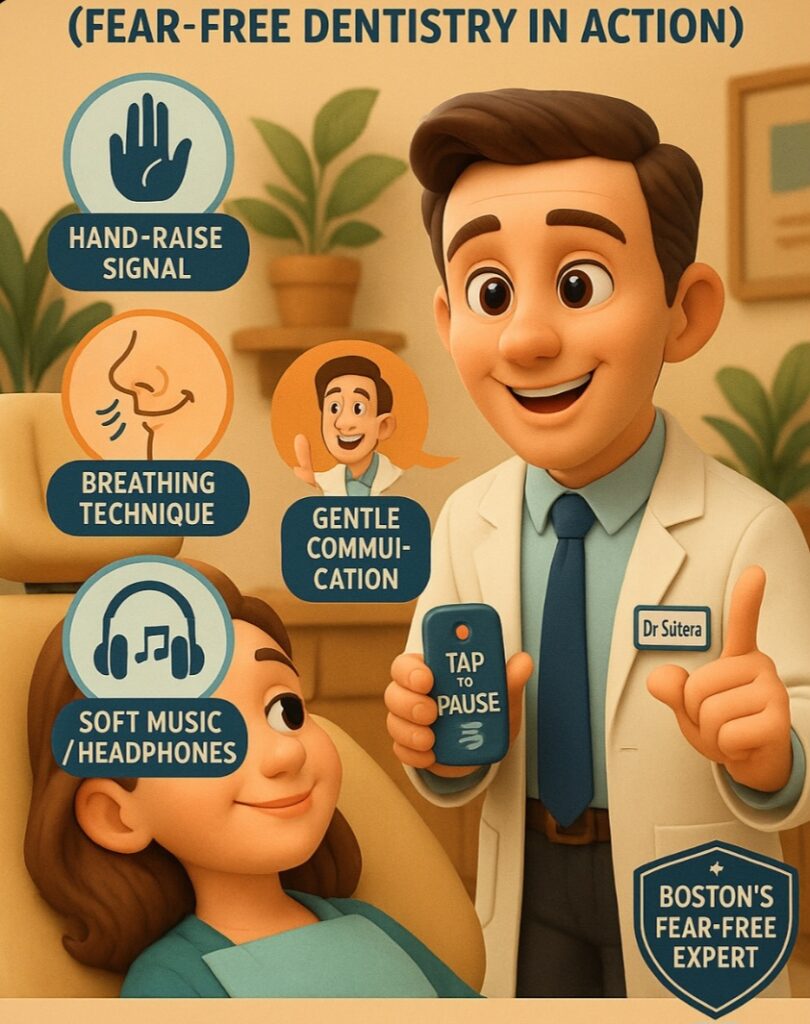
How Do Fear-Free Dentists Build Trust?
What Is Empathetic Communication in Fear-Free Dentistry?
One of the foundations of fear-free dentistry is empathetic communication. Dentists establish trust by using friendly, clear language and creating a dialogue with patients. To illustrate:
- They introduce themselves warmly and explain each step beforehand.
- They ask open-ended questions to understand your specific fears.
- They actively listen and respond with reassurance.
As a result, when patients feel genuinely heard, their anxiety often diminishes dramatically.
How Do Nonverbal Cues Help Calm Patients?
In addition to words, nonverbal signals play a big role. For example, eye contact, relaxed posture, and gentle hand movements all help convey safety. Avoiding abrupt actions or clinical phrasing also reduces the risk of triggering fear.

What Is a Patient-Controlled Signal System?
Creating a shared system where patients can raise a hand or tap to pause treatment empowers them to take control. This approach transforms the patient from a passive participant into an active collaborator—reducing helplessness and increasing trust.
What Environmental Changes Support Fear-Free Dentistry?
Can Lighting Make the Dental Office Feel Safer?
Yes, it can. Replacing harsh fluorescents with warm LED lighting or daylight creates a soothing environment. Many Boston offices use calming paint colors—like soft blues or earth tones—to promote relaxation from the waiting room to the operatory.
What Features Create a Calming Waiting Room?
Even before treatment begins, the environment matters. Dental offices focused on fear-free dentistry often feature:
- Comfortable, cushioned seating
- Cozy throw blankets and calming artwork
- Natural plants and minimalist décor
These design choices help patients feel welcome and at ease.

How Does Sound Impact Dental Anxiety?
Fear-free practices often use instrumental music or white noise to soften or mask mechanical sounds. Patients may be offered noise-canceling headphones or even choose their own playlists, giving them auditory control.
What Role Does Scent Play in Dental Comfort?
Mild aromatherapy with essential oils like lavender or eucalyptus is another calming element. When paired with tactile comforts—like heated neck pillows or fleece blankets—it enhances the overall sense of security.
What Patient-Centered Techniques Help Without Sedation?
What Is the Tell-Show-Do Method in Fear-Free Dentistry?
This simple yet powerful method walks patients through each step:
- Tell – Explain what will happen.
- Show – Demonstrate the step or tool.
- Do – Proceed with treatment.
When used correctly, this reduces surprises and builds trust—especially for patients who fear the unknown.
How Can Breathing Help With Dental Fear?
Guided breathing exercises help reduce anxiety naturally. For instance:
- Breathe in through your nose for four seconds
- Hold your breath for two seconds
- Slowly exhale through your mouth for six seconds
Repeating this pattern lowers heart rate and encourages relaxation.
What Is the Role of Positive Reinforcement?
Acknowledging a patient’s bravery can go a long way. Simple praise—“You’re doing great!”—or offering small comforts reinforces positive behaviors. This builds confidence for future visits.
Why Is Customization So Important in Fear-Free Dental Visits?
Every patient is different. Fear-free dentists adjust their approach by offering longer appointments, visual aids, or allowing breaks as needed. This flexibility builds confidence and a sense of partnership.
What Advanced Techniques Support Fear-Free Dentistry?
Can Virtual Reality Reduce Dental Anxiety?
Yes. Some Boston practices use virtual reality headsets to immerse patients in relaxing visual experiences during treatment. Studies show VR significantly reduces anxiety and improves comfort.
How Can Cognitive Behavioral Techniques Be Integrated?
Dentists or therapists may teach CBT strategies—like thought reframing or mindfulness phrases—to help patients manage negative beliefs. These tools work especially well before and during appointments.
Is Hypnosis Used in Fear-Free Dentistry?
While less common, some providers use dental hypnosis to guide patients into deep relaxation. This method can reduce both fear and discomfort, particularly for those with severe dental anxiety.
What If I’m Still Nervous Without Sedation?
Fear-free dentistry provides many options that work without medication. Still, sedation can be added if needed. For example, some patients may benefit from nitrous oxide (laughing gas) or oral anti-anxiety medication.
Ultimately, your dental care plan should be tailored to you—based on your comfort level, history, and preferences.
📍 In the Boston area? Dr. Sutera and his team offer specialized fear-free dentistry with or without sedation. You’ll receive respectful care from your first consult through every procedure.
🔗 Book your fear-free dental consultation with Dr. Sutera today → [Insert link]
How to Prepare for a Fear-Free Dental Appointment
To set yourself up for success:
- Bring music or headphones for distraction
- Avoid caffeine and eat something light beforehand
- Try breathing or meditation exercises en route
- Share concerns early with your dental team
- Choose a morning appointment to reduce build-up of anxiety
The more you prepare, the more relaxed you’ll feel walking in.
Frequently Asked Questions
▸What exactly is fear-free dentistry?
▸Can I really stay calm without sedation?
▸How do fear-free dentists build trust from the start?
▸What office features help lower anxiety?
▸Do techniques like VR, CBT, or hypnosis actually help?
▸How should I prepare for a fear-free appointment?
▸Is this approach right for severe dental phobia?
▸Will insurance cover fear-free visits?
▸How do I know if a dentist truly practices fear-free care?
💬 Have questions about fear-free dentistry? Drop them in the comments — we read and respond to every one.
🔔 Subscribe for expert tips on dental anxiety relief, comfort-focused dentistry, and cosmetic dental care in Boston.
