

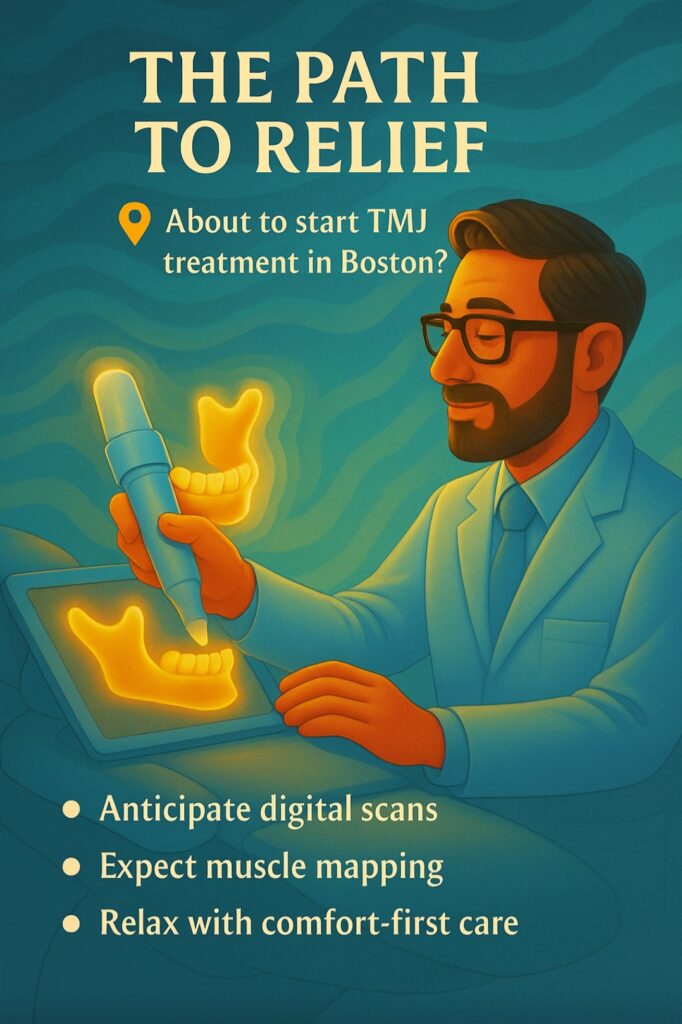
Most people put off a TMJ visit because they don’t know what’s going to happen in the room. So here’s exactly what your first visit with me looks like, step by step, and what you can do beforehand to get the most out of it.
Preparing for TMJ treatment.
What happens at your first TMJ consultation?
We talk first. Before I examine anything, I want to hear your story and what’s been going on.
I’ll ask about your symptoms: jaw pain, headaches, ringing in the ears, neck tension. No detail is too small. I’ll also ask what relief looks like for you. Maybe it’s biting into an apple again. Maybe it’s waking up without a headache.
Then I do a gentle physical exam. I check how far your jaw opens, listen for joint sounds and feel the muscles of your head and neck. The goal isn’t to rush to an answer. It’s to connect your symptoms to what’s actually causing them.
How is TMJ disorder diagnosed?
With imaging and a precise record of your bite. A good diagnosis is what makes treatment work, so I don’t guess.
- Panoramic X-ray and/or 3D cone beam CT scan. This shows your jaw joints, bone structure and airway in detail, which matters for planning safe care.
- Digital bite analysis. This records how your teeth meet with real precision and picks up imbalances you can’t see by eye.
Together, these tell me what’s straining your jaw, so your plan fits you and not an average patient.
What will your TMJ treatment plan include?
A clear explanation of every step before anything starts. Once I have a diagnosis, I sit down with you and walk through it.
You’ll know why I’m recommending each step, what each one involves in plain English, how long it should take and what it costs. No surprises. If you’re not confident in the plan, we keep talking until you are.
Can you be sedated during TMJ treatment?
Yes, if you need it. Most TMJ treatment isn’t invasive, but a lot of my TMJ patients also have dental anxiety, and comfort is part of the plan from day one.
- Nitrous oxide (laughing gas) takes the edge off nerves during a visit.
- Conscious sedation gives deeper relaxation, so longer procedures feel easy and calm.
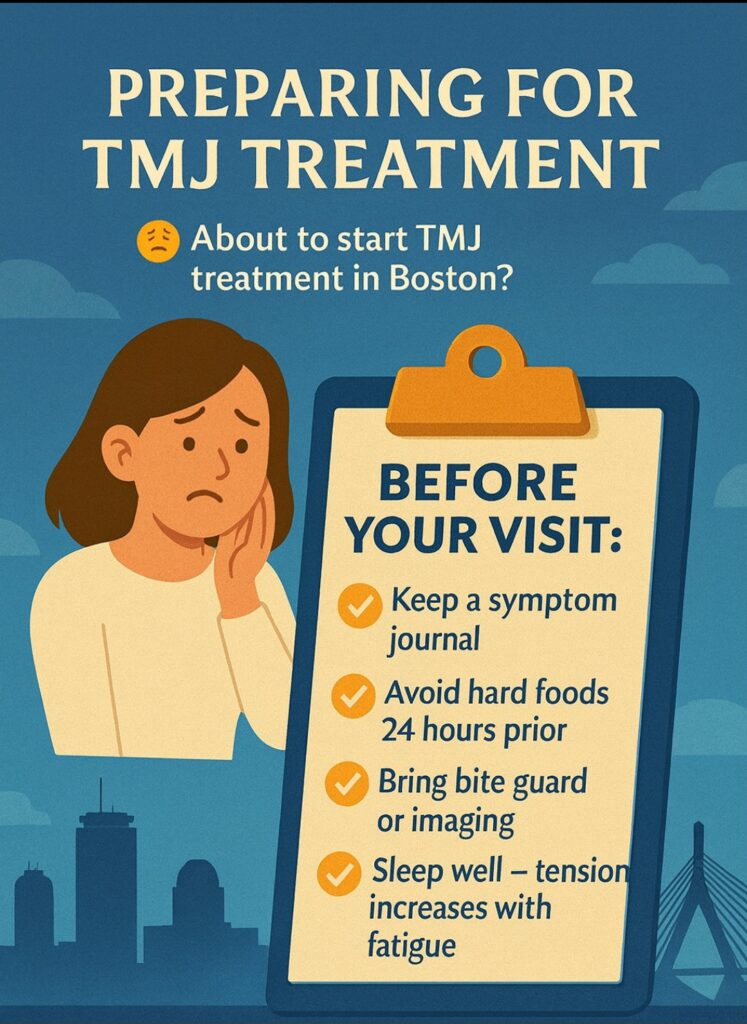
Preparing for TMJ treatment.
How should you prepare for your first TMJ visit?
Bring a little information and give yourself some time. Here’s what helps most:
- A list. Your symptoms, key medical history and every medication or supplement you take.
- Your triggers. What makes your jaw worse? Stress, chewing, certain postures?
- Your questions. Write down what you’re curious or nervous about so nothing gets forgotten.
- A few extra minutes. Arrive early so you’re not walking in rushed.
What if TMJ surgery comes up?
For most people, it won’t. Surgery is reserved for a small number of cases. If you want to understand when it’s considered, here’s what TMJ surgery involves and when it’s needed.
When you’re ready, schedule a consultation with me and we’ll find out what’s driving your jaw pain and map out a path to relief.
This article is general educational information and not a substitute for a dental evaluation. Individual needs vary. All sedation is provided under a Massachusetts Board sedation permit with continuous monitoring.
Jaw pain brings patients to our Waltham office from Lexington, Concord, Wellesley, Newton, Somerville, Cambridge, Brookline and Waltham itself. TMJ treatment can often start the same day as your first evaluation, so you do not make the drive twice before anything happens. Aesthetic Smile Reconstruction, 75 3rd Ave, Waltham, MA 02451, (781) 487-1111. See how TMJ treatment works here.
