
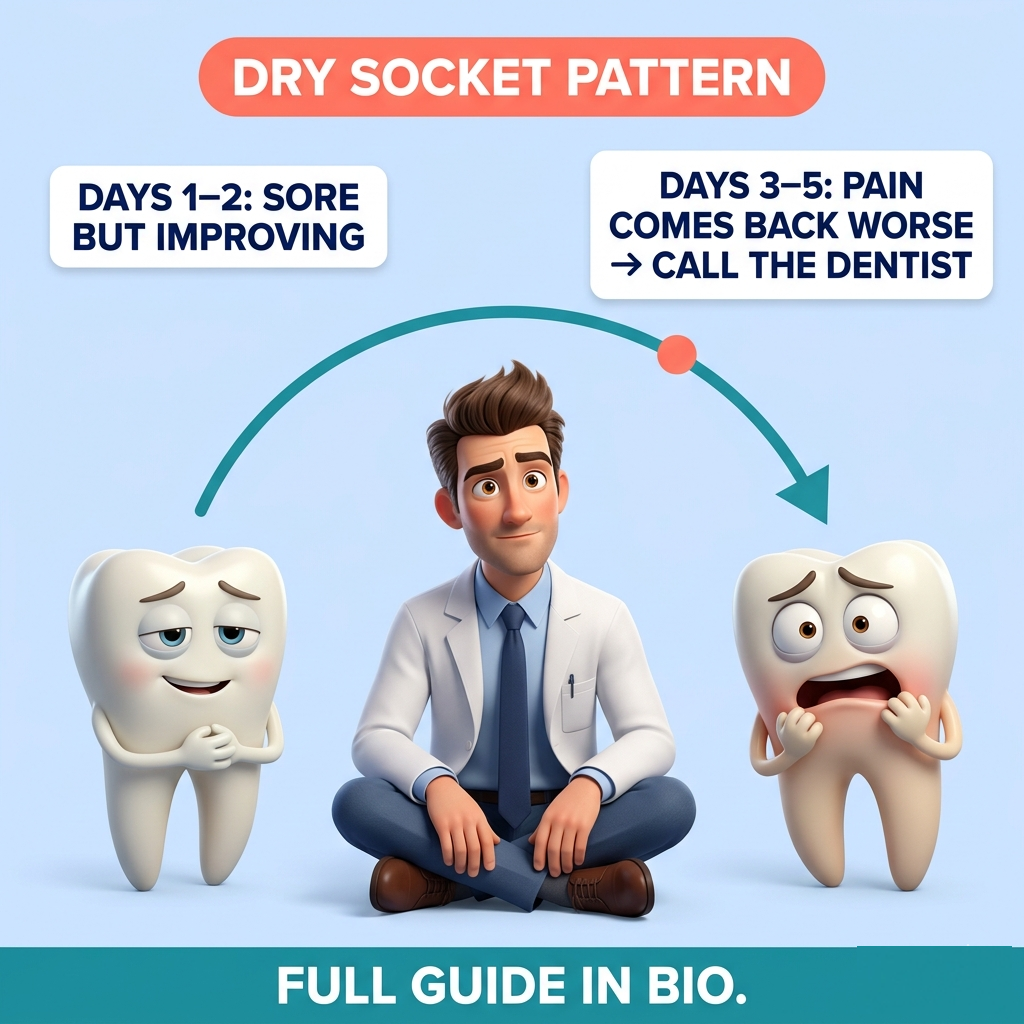
Dry socket is the most common complication after tooth extraction, and it follows a pattern that is specific enough to recognize. Pain that was improving in the first 2 to 3 days suddenly worsens around day 3 to 5. The socket looks different: empty, pale, without the dark clot tissue that characterizes normal healing. The pain may radiate to the ear or jaw. That constellation of symptoms is dry socket, and it requires treatment.
This guide covers what dry socket is, what causes it, who is at higher risk, how it is treated, what manages pain at home while waiting for an appointment, and exactly when you can stop worrying about it developing. For the full aftercare protocol that prevents dry socket from occurring in the first place, see Tooth Extraction Aftercare: The Complete Do’s and Don’ts Guide.
What is dry socket and when does it occur?
Dry socket, clinically called alveolar osteitis, occurs when the blood clot that forms in the extraction socket is dislodged or dissolves before the socket has healed sufficiently. When the clot is lost, the underlying bone is exposed to the oral environment. Bone is densely innervated. Exposed bone in an open socket produces severe, often radiating pain that is significantly worse than normal post-extraction soreness.
Research published in the National Library of Medicine documents dry socket occurring in approximately 3 percent of routine tooth extractions and up to 30 percent of wisdom tooth extractions. Lower molar extractions carry a higher risk than upper extractions due to differences in bone density and blood supply. Dry socket is common enough that dental offices see it regularly. It is a recognized complication with a specific treatment. It is not a sign that the extraction was performed incorrectly.
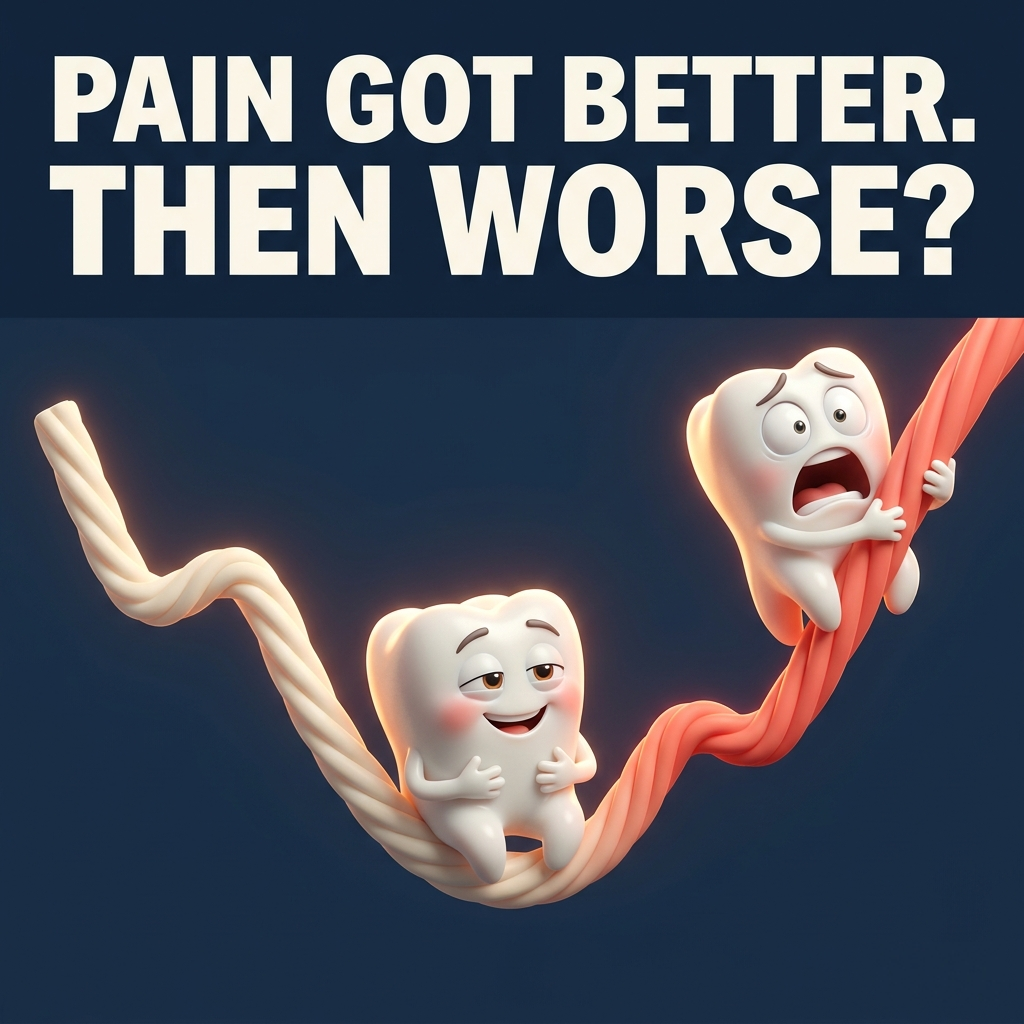
The timing is specific. Dry socket almost always presents between day 3 and day 5 after extraction. The presentation pattern is recognizable: the first 2 to 3 days involved manageable soreness that seemed to be improving, then around day 3 to 5 the pain returned severely. That worsening-after-improvement pattern, combined with the timing, is the defining clinical signature of dry socket.
What does dry socket feel like?
Dry socket produces a severe, throbbing ache centered at the extraction site. The key differentiator from normal post-extraction soreness is the timing and trajectory: normal soreness peaks in the first 48 hours and progressively improves. Dry socket pain arrives or significantly worsens after that improvement has already begun. Patients consistently describe the sensation as more intense than the initial post-extraction pain. It is not a continuation of it but a return of something worse.
In lower jaw extractions, the pain frequently radiates from the socket toward the ear and along the jaw on the same side. This happens because the inferior alveolar nerve, which runs through the lower jaw, is irritated by the exposed bone in the socket. Patients with lower molar dry socket often initially suspect an ear problem before the dental source is identified. Upper jaw dry socket tends to be more localized and less prone to this radiation pattern.
If you had multiple teeth extracted simultaneously, such as all four wisdom teeth, dry socket at one site will feel distinctly different from the other healing sites. All sites will be tender, but the dry socket site will be significantly more painful and inflamed than the rest. That asymmetry is a useful clinical signal even before you look at the socket.
What does dry socket look like?
A normal healing socket contains a dark blood clot that fills the socket and gradually becomes covered with granulation tissue as healing progresses. A dry socket looks different: the socket appears empty, pale, or exposed rather than filled with dark clot tissue. In some cases the exposed bone is visible. The surrounding gum tissue appears more inflamed and may be red or swollen compared to adjacent healing sites.

The visual appearance alone is not always sufficient for a reliable self-diagnosis. The socket can be difficult to see clearly, and the distinction between a normally healing socket and a dry socket is clearer to a trained clinical eye. If the timing and pain pattern suggest dry socket, call the dental office. The diagnosis and treatment are straightforward and do not require imaging.
What causes dry socket?
Dry socket has four primary cause categories: mechanical disruption, smoking, pre-existing infection, and biological risk factors. Understanding which category applies helps patients identify what went wrong and prevents recurrence if a second extraction is needed.
Mechanical disruption
The most common mechanical causes of dry socket are suction-generating activities: drinking through a straw, smoking, and vigorous rinsing or spitting. Each of these creates negative pressure or turbulence in the mouth that physically dislodges the clot from the socket. The clot is most vulnerable in the first 48 to 72 hours when it has not yet organized fully. Even after the clot matures, these activities remain a risk for approximately the first week.
Smoking
Smoking causes dry socket through two distinct mechanisms. The first is mechanical: the suction created when smoking is sufficient to dislodge the clot, identical to the straw problem. The second is pharmacological: nicotine causes vasoconstriction, reducing blood supply to the healing socket. Carbon monoxide and other compounds in tobacco smoke directly impair cellular wound healing. Smokers have significantly higher dry socket rates than non-smokers, and the risk exists even with smokeless nicotine products that don’t create suction, because the vasoconstriction mechanism still applies.
Pre-existing infection
Extracting a tooth that was infected before the procedure increases dry socket risk because the bacterial environment in the socket interferes with clot formation and stability. The bacteria and inflammatory byproducts already present can prevent a stable clot from organizing. This is why many dentists prescribe prophylactic antibiotics after extracting infected teeth. This is not to treat the extraction site itself but to reduce the bacterial load that impairs clot formation.
Biological risk factors
Several systemic factors increase dry socket risk independently of patient behavior. Uncontrolled diabetes impairs wound healing and clot organization. Autoimmune conditions, particularly those involving connective tissue, affect the healing cascade. Oral contraceptives alter estrogen levels in a way that affects fibrinolysis, the biological process by which clots break down. Patients on anticoagulant medications have altered clotting mechanics that affect socket healing. These factors are worth disclosing to the treating dentist before extraction so preventive measures can be taken.
Who is at higher risk for dry socket?
Certain patient profiles carry significantly elevated dry socket risk. Wisdom tooth extractions, particularly lower wisdom teeth, have a dry socket rate up to ten times higher than routine single tooth extractions. Patients with a prior history of dry socket are more likely to develop it again. Lower jaw extractions carry higher risk than upper jaw extractions due to denser bone and different blood supply patterns. Active smokers, patients on oral contraceptives, patients with uncontrolled diabetes, patients on anticoagulants, and patients whose extracted tooth was actively infected all face elevated risk. Patients with autoimmune conditions, particularly lupus and rheumatoid arthritis, have altered healing responses that increase risk as well.
Knowing your risk profile before extraction allows your dentist to take preventive measures, including more detailed aftercare instruction, antibiotic coverage where appropriate, and scheduling a follow-up specifically for early detection if symptoms develop.
How is dry socket treated?
In-office treatment
In-office treatment for dry socket is straightforward and provides rapid relief. The dentist anesthetizes the area, irrigates the socket to remove debris and food particles, and places a medicated dressing directly into the socket. The dressing contains eugenol, the same compound found in clove oil, along with other soothing agents. Eugenol has both anesthetic and antibacterial properties. It soothes the exposed bone and creates an environment that allows healing to restart.
Patients who come in with dry socket consistently report that the pain begins to ease within minutes to hours of dressing placement. It is one of the most reliably immediate treatment responses in dentistry. The dressing may need to be replaced once or twice over the following week as the socket heals. Once the new granulation tissue covers the exposed bone, the acute pain phase is over.
If dry socket has become infected, indicated by worsening swelling, fever, or discharge from the socket, the dentist may also prescribe antibiotics or chlorhexidine rinse in addition to the dressing. Infected dry socket is a more complex clinical situation but remains manageable with appropriate treatment.
Home management while waiting for an appointment
Home management provides partial pain control while you wait to be seen. Ibuprofen addresses the inflammatory component and provides meaningful relief. Naproxen sodium has a longer duration of action than ibuprofen, approximately 8 to 12 hours versus 4 to 6 hours, which can be more practical between dental appointments. If you cannot take NSAIDs due to stomach issues or contraindications, acetaminophen is the next best option. Follow label dosing instructions on all over-the-counter medications.
Clove oil placed directly into the socket provides temporary topical anesthesia through eugenol. A small amount on a clean cotton pellet applied directly to the socket can reduce pain for a period. This is the same mechanism as the professional dressing, at a lower concentration. It is not a substitute for clinical treatment, but it provides meaningful comfort when getting to the office is not immediately possible.
Warm compresses applied to the outside of the cheek help soothe the surrounding muscles. Keep food away from the socket to prevent particles from lodging in the exposed area. Avoid suction-generating activities regardless. They will not worsen a dry socket at this stage, but continued mechanical disruption impairs whatever healing is attempting to occur.
Why topical anesthetic gels do not work well for dry socket
Patients frequently try topical gels like benzocaine products on the gum tissue surrounding the socket. These work well for surface irritations: ulcers, minor cuts, gum inflammation. They do not work well for dry socket because the pain source is not at the surface. The pain is generated by exposed bone inside the socket, which is several millimeters below and inside the gum tissue. Rubbing anesthetic gel around the rim of the socket does not place the anesthetic anywhere near the pain source, and repeated application disturbs an area that needs to be left as undisturbed as possible.
When can you stop worrying about dry socket?

Dry socket presents within the first 3 to 5 days after extraction in the overwhelming majority of cases. Once you are past day 7 post-extraction without developing dry socket symptoms, the risk is effectively gone. The socket may still be tender and healing, but the window for dry socket development has closed.
For wisdom tooth extractions, particularly lower wisdom teeth, I tell patients to be watchful through day 7 rather than just day 5, given the higher baseline risk. But the same principle applies: progressively improving pain that does not suddenly worsen after the third day is normal healing, not dry socket. If you reach day 7 and the pain has been consistently improving, stop worrying.
The hole in the gum does not close quickly. Full socket closure takes 3 to 4 weeks, and patients sometimes confuse the persistent opening with ongoing dry socket. The two are different: a visible hole that is not painful and not getting worse is normal socket healing. Pain is the indicator that matters, not the appearance of the socket in the mirror.
How do you prevent dry socket?
The first 72 hours after extraction are the highest-risk window. The blood clot is at its most vulnerable during this period. Every preventive measure in dry socket management exists to protect that clot during its most fragile stage.
No straws for a minimum of 10 days. Smoking is not ok for at least 72 hours and ideally 7 days. No vigorous rinsing or spitting for 24 hours. After 24 hours, salt water rinses are appropriate but must be gentle, placed in the mouth passively and allowed to drain, not swirled forcefully. No alcohol-containing mouthwash for 2 weeks. Avoid crunchy, sharp-edged foods that can fragment into pieces small enough to lodge in the socket. Limit physical activity that significantly elevates heart rate for the first 5 to 7 days.
Follow the specific aftercare instructions provided by your treating dentist. Instructions may vary based on the complexity of the extraction, whether the tooth was infected, and your individual risk profile. For the complete aftercare protocol, see Tooth Extraction Aftercare: The Complete Do’s and Don’ts Guide.
Frequently asked questions about dry socket

How long does dry socket last?
Most dry sockets resolve within 7 to 10 days with appropriate treatment. With a medicated dressing placed by a dentist, pain relief typically begins within hours of placement. Without treatment, dry socket pain can persist for several weeks. The socket itself continues healing after the pain resolves. Complete socket closure takes 3 to 4 weeks regardless of whether dry socket occurred.
What does dry socket feel like?
Dry socket produces a severe throbbing ache beginning 3 to 5 days after extraction. The pain typically worsens after the initial post-extraction soreness was improving. That return of worsening pain after an improving trend is the defining characteristic. In lower jaw extractions, the pain frequently radiates to the ear or jaw on the same side.
Can dry socket heal on its own without treatment?
Dry socket heals on its own eventually, but without treatment the pain can be severe for 1 to 2 weeks or longer. A medicated dressing dramatically accelerates comfort. Most patients feel significant relief within hours of placement. The socket does not heal faster without treatment, only more painfully. Call the dental office for any suspected dry socket rather than waiting it out.
When can I stop worrying about dry socket?
Dry socket almost always presents within the first 3 to 5 days after extraction. Once you are past 7 days post-extraction without developing dry socket symptoms, the risk is effectively gone. A visible socket opening that is not painful is normal healing, not dry socket. Pain that is progressively improving through the first week is also normal healing.
Does ibuprofen help with dry socket pain?
Ibuprofen reduces inflammation and provides partial pain relief for dry socket. Naproxen sodium has a longer duration of action, approximately 8 to 12 hours versus 4 to 6 hours for ibuprofen, which can provide better sustained relief between appointments. Neither medication resolves dry socket. Both manage pain while the condition heals. Professional treatment with a medicated dressing is significantly more effective than any over-the-counter option.
If you are experiencing symptoms consistent with dry socket, call our Waltham office at 781-487-1111. Same-day appointments for dry socket are available. For a full overview of post-extraction complications and when to seek care, see Dental Emergencies: When to Call, When to Go to the ER, and What to Do While You Wait.
Serving Waltham, Newton, Brookline, Wellesley, Needham, Lexington, Cambridge, and Greater Boston.
Dr. Charles Sutera, DMD, FAGD, practices cosmetic and emergency dentistry at Aesthetic Smile Reconstruction in Waltham, Massachusetts. He provides same-day care for post-extraction complications including dry socket and infection for patients throughout Greater Boston.
This article provides general educational information and is not a substitute for professional dental evaluation. If you have symptoms consistent with dry socket or post-extraction infection, call your dental office directly.
