
When recession exposes root surfaces, causing sensitivity, appearance changes, or risk to the tooth, gum grafting is the right treatment. The treatment uses donor tissue, typically from the palate, to cover the exposed root. It restores coverage, reduces sensitivity, and protects the root from further loss and decay.
While grafting is surgical and requires recovery time, But it is the only treatment that restores what recession has removed. The decision to graft or monitor depends on how much recession is present, how fast it is progressing, and whether the exposed root is causing symptoms or risk to the tooth.
Do natural remedies help bleeding gums?
Several natural remedies have research supporting their role as adjuncts to professional care. However, none of them replaces professional cleaning for patients with established calculus or active gum disease. The distinction between adjunct and replacement is clinically important. Patients who substitute natural remedies for professional care while disease progresses have worse outcomes than those who do nothing, because they delay treatment while feeling they are addressing the problem.
For example, saltwater rinses have antibacterial properties and support healing tissue. Simply dissolve a teaspoon of salt in eight ounces of warm water, rinsed gently and allowed to drain passively rather than swirled forcefully, reduces oral bacterial load without the side effects of chemical rinses. They work well for daily use as a supplement to brushing and flossing.
Oil pulling, which involves swishing about a tablespoon of coconut oil of oil for 10 to 15 minutes, has shown in multiple peer-reviewed studies to reduce plaque scores and gingivitis markers after 1 to 2 weeks of consistent use. The mechanical action of swishing combined with the antimicrobial properties of lauric acid in coconut oil contribute to the effect. Still, it is not a substitute for brushing or flossing, but it is a legitimate adjunct for patients who are already doing both.
Regular green tea consumption has documented anti-inflammatory and antioxidant effects that show measurable reduction in periodontal inflammation markers in research settings. Similarly, turmeric contains curcumin, which has anti-inflammatory properties, and limited research supports its topical use as a gel for gingival inflammation. Aloe vera gel applied topically to inflamed gum tissue has shown anti-inflammatory effects in small clinical studies. In short, these are reasonable lifestyle additions. But none of them removes calculus, closes periodontal pockets, or arrests bone loss in established periodontitis.
What does gum disease treatment cost in the Boston area?
As with most dental conditions, treatment costs rise with disease severity. A routine cleaning for gingivitis costs $150 to $250, and most insurance covers it at 100 percent twice per year. Scaling and root planing for periodontitis runs $300 to $800 per quadrant and is partially covered under most PPO plans. Gum grafting usually costs $700 to $1,500 per site and insurance may partly cover it when the tooth needs protection.
In short: treating gum disease earlier costs less, takes less time, and preserves more. For more on how insurance covers periodontal treatment, see How Dental Insurance Actually Works (And What It Won’t Cover).
| Treatment | Boston area cost | Typical insurance coverage | When indicated |
|---|---|---|---|
| Preventive cleaning (cleaning) | $150–$250 | 100% twice per year | Gingivitis, healthy gums |
| Deep cleaning (scaling and root planing) | $300–$800 per quadrant | Partially covered under periodontal benefit | Periodontitis (pocket depths 5mm+) |
| Gum grafting | $700–$1,500 per site | Partially covered if medically necessary | Significant recession with exposed root |
| Periodontal maintenance | $150–$250 | Covered at 3–4 month intervals for treated periodontitis | After deep cleaning, ongoing management |
The cost comparison between prevention and treatment in gum disease follows the same pattern as other dental disease: a regular cleaning that prevents gingivitis from progressing costs a fraction of the deep cleaning required once it becomes periodontitis, which costs a fraction of the grafting required once recession becomes significant. The financial logic of early treatment is consistent at every stage.
Is gum disease linked to other health conditions?
Yes, and the research base is substantial. The American Heart Association has published a scientific statement confirming an link between periodontal disease and heart disease risk through shared body-wide inflammation pathways. In fact, patients with untreated periodontitis show higher rates of heart events than those with treated or healthy gums. The mechanism is the chronic systemic inflammation burden produced by a persistent bacterial infection in the gums.
Diabetic patients face a two-way relationship with gum disease: elevated blood sugar accelerates periodontitis progression, and active periodontal infection worsens glycemic control. Importantly, treating gum disease in diabetic patients produces clear improvements in HbA1c levels. Periodontitis has also been linked to adverse pregnancy outcomes including preterm birth and low birth weight, making periodontal evaluation an important component of prenatal care.
These links do not mean that treating gum disease cures heart disease or reverses diabetes. They mean that untreated gum disease contributes to a systemic inflammatory environment that worsens multiple chronic conditions simultaneously. So treating it is not just oral health care. It is systemic health care.
Frequently asked questions about bleeding gums
Can receding gums grow back?
No. Once gums recede, that tissue does not grow back on its own. Better home care and regular cleanings can stop recession from getting worse further, but they do not restore tissue that has already been lost. Gum grafting is the only treatment that restores coverage to exposed root surfaces. The decision to graft versus monitor depends on the severity of recession and whether the exposed root is producing symptoms or risk to the tooth.
How long does it take to reverse gingivitis?
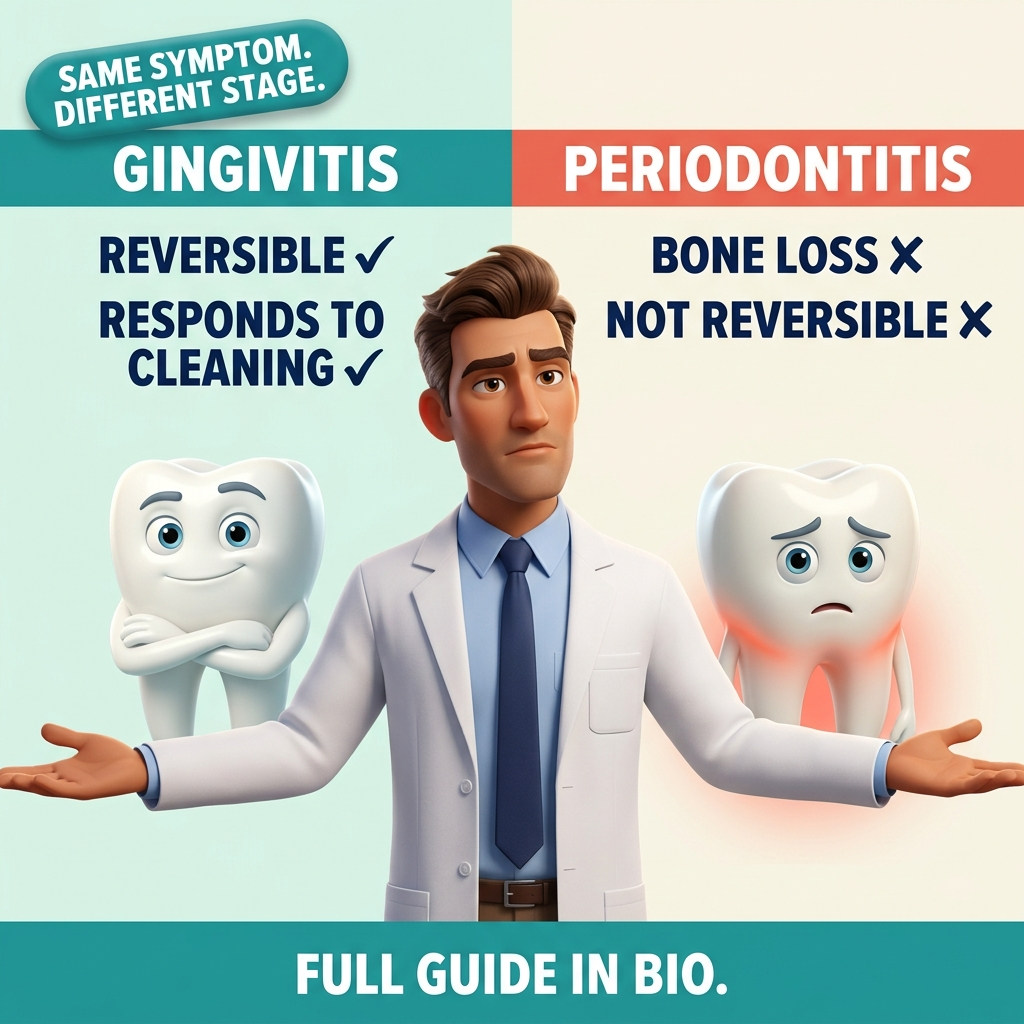
With professional cleaning and consistent home care, gingivitis usually improves within 7 to 14 days. In fact, bleeding that was occurring with every brushing session often stops within 1 to 2 weeks of calculus removal and improved plaque control. Importantly, gingivitis is fully reversible at this stage. The gum tissue returns to health with no lasting damage. Periodontitis, by contrast, involves bone loss that does not reverse.
Should I floss if my gums are bleeding?
Yes. Specifically, bleeding gums are a sign that you need to floss more, not less. The bleeding shows inflamed tissue from plaque accumulation between teeth, the area only flossing reaches. Consistent daily flossing removes that plaque, reduces the inflammation, and the bleeding stops within 1 to 2 weeks. Stopping flossing because it causes bleeding removes the treatment that would resolve it.
What causes bleeding gums?
Simply put, the main cause is plaque buildup at the gumline that has not been adequately removed by brushing and flossing. Bacterial byproducts in plaque trigger inflammation in the gum tissue, making it swollen and prone to bleeding on contact. Secondary causes include smoking, vitamin C shortage, hormonal changes during pregnancy, certain medications, and aggressive brushing with a hard-bristle brush.
Is gum disease linked to heart disease?
Yes. The American Heart Association has confirmed an link between periodontal disease and heart disease risk through body-wide inflammation. Chronic bacterial infection in the gums produces inflammation markers that contribute to heart disease processes. Patients with untreated periodontitis have higher rates of heart events. Treating gum disease reduces the systemic inflammation burden, which is relevant to overall heart health.
Bleeding gums at the early gingivitis stage are reversible with professional cleaning and improved home care. At the periodontitis stage, treatment becomes more involved and bone loss becomes permanent. The earlier the treatment, the simpler and less costly the path back to healthy gums. Schedule an evaluation at our Waltham office or call 781-487-1111.
Serving Waltham, Newton, Brookline, Wellesley, Needham, Lexington, Cambridge, and Greater Boston.
Dr. Charles Sutera, DMD, FAGD, practices cosmetic and preventive dentistry at Aesthetic Smile Reconstruction in Waltham, Massachusetts. He specializes in comprehensive preventive care, periodontal disease management, TMJ treatment, and sedation dentistry for patients throughout Greater Boston.
This article provides general educational information and is not a substitute for professional dental evaluation. Individual needs vary. Schedule a consultation for personalized recommendations.
Vitamin C shortage directly weakens gum tissue by impairing collagen production. The tissue loses strength and becomes more vulnerable to bacterial damage. Research in the National Library of Medicine links low vitamin C intake to higher periodontal disease risk. Patients with bleeding gums who eat few fresh fruits and vegetables are worth evaluating for nutritional shortage.
Beyond vitamin C, omega-3s reduce gum inflammation, and low vitamin D levels connect to higher rates of periodontitis through effects on immunity and calcium absorption. Diet alone is not a replacement for professional care, but it is a contributing factor that matters.
Can receding gums grow back?
No. This is one of the most important clinical facts about gum disease that patients do not hear clearly enough. Once gums recede, that tissue does not grow back naturally. The gum margin that has pulled away from the tooth root does not return to its original position through brushing method changes, natural remedies, or improved home care alone.
What good care can do is stop recession from getting worse. A patient who catches early recession and addresses the cause, whether gum disease, aggressive brushing, or bite-related forces, can stabilize the recession at its current level and prevent additional loss. That is clinically significant and worth pursuing. But it is not the same as reversal.
When recession exposes root surfaces, causing sensitivity, appearance changes, or risk to the tooth, gum grafting is the right treatment. The treatment uses donor tissue, typically from the palate, to cover the exposed root. It restores coverage, reduces sensitivity, and protects the root from further loss and decay.
While grafting is surgical and requires recovery time, But it is the only treatment that restores what recession has removed. The decision to graft or monitor depends on how much recession is present, how fast it is progressing, and whether the exposed root is causing symptoms or risk to the tooth.
Do natural remedies help bleeding gums?
Several natural remedies have research supporting their role as adjuncts to professional care. However, none of them replaces professional cleaning for patients with established calculus or active gum disease. The distinction between adjunct and replacement is clinically important. Patients who substitute natural remedies for professional care while disease progresses have worse outcomes than those who do nothing, because they delay treatment while feeling they are addressing the problem.
For example, saltwater rinses have antibacterial properties and support healing tissue. Simply dissolve a teaspoon of salt in eight ounces of warm water, rinsed gently and allowed to drain passively rather than swirled forcefully, reduces oral bacterial load without the side effects of chemical rinses. They work well for daily use as a supplement to brushing and flossing.
Oil pulling, which involves swishing about a tablespoon of coconut oil of oil for 10 to 15 minutes, has shown in multiple peer-reviewed studies to reduce plaque scores and gingivitis markers after 1 to 2 weeks of consistent use. The mechanical action of swishing combined with the antimicrobial properties of lauric acid in coconut oil contribute to the effect. Still, it is not a substitute for brushing or flossing, but it is a legitimate adjunct for patients who are already doing both.
Regular green tea consumption has documented anti-inflammatory and antioxidant effects that show measurable reduction in periodontal inflammation markers in research settings. Similarly, turmeric contains curcumin, which has anti-inflammatory properties, and limited research supports its topical use as a gel for gingival inflammation. Aloe vera gel applied topically to inflamed gum tissue has shown anti-inflammatory effects in small clinical studies. In short, these are reasonable lifestyle additions. But none of them removes calculus, closes periodontal pockets, or arrests bone loss in established periodontitis.
What does gum disease treatment cost in the Boston area?
As with most dental conditions, treatment costs rise with disease severity. A routine cleaning for gingivitis costs $150 to $250, and most insurance covers it at 100 percent twice per year. Scaling and root planing for periodontitis runs $300 to $800 per quadrant and is partially covered under most PPO plans. Gum grafting usually costs $700 to $1,500 per site and insurance may partly cover it when the tooth needs protection.
In short: treating gum disease earlier costs less, takes less time, and preserves more. For more on how insurance covers periodontal treatment, see How Dental Insurance Actually Works (And What It Won’t Cover).
| Treatment | Boston area cost | Typical insurance coverage | When indicated |
|---|---|---|---|
| Preventive cleaning (cleaning) | $150–$250 | 100% twice per year | Gingivitis, healthy gums |
| Deep cleaning (scaling and root planing) | $300–$800 per quadrant | Partially covered under periodontal benefit | Periodontitis (pocket depths 5mm+) |
| Gum grafting | $700–$1,500 per site | Partially covered if medically necessary | Significant recession with exposed root |
| Periodontal maintenance | $150–$250 | Covered at 3–4 month intervals for treated periodontitis | After deep cleaning, ongoing management |
The cost comparison between prevention and treatment in gum disease follows the same pattern as other dental disease: a regular cleaning that prevents gingivitis from progressing costs a fraction of the deep cleaning required once it becomes periodontitis, which costs a fraction of the grafting required once recession becomes significant. The financial logic of early treatment is consistent at every stage.
Is gum disease linked to other health conditions?
Yes, and the research base is substantial. The American Heart Association has published a scientific statement confirming an link between periodontal disease and heart disease risk through shared body-wide inflammation pathways. In fact, patients with untreated periodontitis show higher rates of heart events than those with treated or healthy gums. The mechanism is the chronic systemic inflammation burden produced by a persistent bacterial infection in the gums.
Diabetic patients face a two-way relationship with gum disease: elevated blood sugar accelerates periodontitis progression, and active periodontal infection worsens glycemic control. Importantly, treating gum disease in diabetic patients produces clear improvements in HbA1c levels. Periodontitis has also been linked to adverse pregnancy outcomes including preterm birth and low birth weight, making periodontal evaluation an important component of prenatal care.
These links do not mean that treating gum disease cures heart disease or reverses diabetes. They mean that untreated gum disease contributes to a systemic inflammatory environment that worsens multiple chronic conditions simultaneously. So treating it is not just oral health care. It is systemic health care.
Frequently asked questions about bleeding gums
Can receding gums grow back?
No. Once gums recede, that tissue does not grow back on its own. Better home care and regular cleanings can stop recession from getting worse further, but they do not restore tissue that has already been lost. Gum grafting is the only treatment that restores coverage to exposed root surfaces. The decision to graft versus monitor depends on the severity of recession and whether the exposed root is producing symptoms or risk to the tooth.
How long does it take to reverse gingivitis?
With professional cleaning and consistent home care, gingivitis usually improves within 7 to 14 days. In fact, bleeding that was occurring with every brushing session often stops within 1 to 2 weeks of calculus removal and improved plaque control. Importantly, gingivitis is fully reversible at this stage. The gum tissue returns to health with no lasting damage. Periodontitis, by contrast, involves bone loss that does not reverse.
Should I floss if my gums are bleeding?
Yes. Specifically, bleeding gums are a sign that you need to floss more, not less. The bleeding shows inflamed tissue from plaque accumulation between teeth, the area only flossing reaches. Consistent daily flossing removes that plaque, reduces the inflammation, and the bleeding stops within 1 to 2 weeks. Stopping flossing because it causes bleeding removes the treatment that would resolve it.
What causes bleeding gums?
Simply put, the main cause is plaque buildup at the gumline that has not been adequately removed by brushing and flossing. Bacterial byproducts in plaque trigger inflammation in the gum tissue, making it swollen and prone to bleeding on contact. Secondary causes include smoking, vitamin C shortage, hormonal changes during pregnancy, certain medications, and aggressive brushing with a hard-bristle brush.
Is gum disease linked to heart disease?
Yes. The American Heart Association has confirmed an link between periodontal disease and heart disease risk through body-wide inflammation. Chronic bacterial infection in the gums produces inflammation markers that contribute to heart disease processes. Patients with untreated periodontitis have higher rates of heart events. Treating gum disease reduces the systemic inflammation burden, which is relevant to overall heart health.
Bleeding gums at the early gingivitis stage are reversible with professional cleaning and improved home care. At the periodontitis stage, treatment becomes more involved and bone loss becomes permanent. The earlier the treatment, the simpler and less costly the path back to healthy gums. Schedule an evaluation at our Waltham office or call 781-487-1111.
Serving Waltham, Newton, Brookline, Wellesley, Needham, Lexington, Cambridge, and Greater Boston.
Dr. Charles Sutera, DMD, FAGD, practices cosmetic and preventive dentistry at Aesthetic Smile Reconstruction in Waltham, Massachusetts. He specializes in comprehensive preventive care, periodontal disease management, TMJ treatment, and sedation dentistry for patients throughout Greater Boston.
This article provides general educational information and is not a substitute for professional dental evaluation. Individual needs vary. Schedule a consultation for personalized recommendations.
By prescription, chlorhexidine gluconate, is the most well-studied antibacterial rinse for gingivitis. Used regularly, it cuts oral bacterial counts meaningfully. Dentists typically prescribe it for two to four weeks after a cleaning. Long-term use causes staining and altered taste, so short courses work best.
Over-the-counter alcohol-free rinses, however, offer a milder bacterial reduction and work well for ongoing maintenance. In contrast, alcohol-based mouthwashes dry out the tissue and offer no real benefit over the alcohol-free versions for gum disease.
Nutrition and vitamin deficiency
Vitamin C shortage directly weakens gum tissue by impairing collagen production. The tissue loses strength and becomes more vulnerable to bacterial damage. Research in the National Library of Medicine links low vitamin C intake to higher periodontal disease risk. Patients with bleeding gums who eat few fresh fruits and vegetables are worth evaluating for nutritional shortage.
Beyond vitamin C, omega-3s reduce gum inflammation, and low vitamin D levels connect to higher rates of periodontitis through effects on immunity and calcium absorption. Diet alone is not a replacement for professional care, but it is a contributing factor that matters.
Can receding gums grow back?
No. This is one of the most important clinical facts about gum disease that patients do not hear clearly enough. Once gums recede, that tissue does not grow back naturally. The gum margin that has pulled away from the tooth root does not return to its original position through brushing method changes, natural remedies, or improved home care alone.
What good care can do is stop recession from getting worse. A patient who catches early recession and addresses the cause, whether gum disease, aggressive brushing, or bite-related forces, can stabilize the recession at its current level and prevent additional loss. That is clinically significant and worth pursuing. But it is not the same as reversal.
When recession exposes root surfaces, causing sensitivity, appearance changes, or risk to the tooth, gum grafting is the right treatment. The treatment uses donor tissue, typically from the palate, to cover the exposed root. It restores coverage, reduces sensitivity, and protects the root from further loss and decay.
While grafting is surgical and requires recovery time, But it is the only treatment that restores what recession has removed. The decision to graft or monitor depends on how much recession is present, how fast it is progressing, and whether the exposed root is causing symptoms or risk to the tooth.
Do natural remedies help bleeding gums?
Several natural remedies have research supporting their role as adjuncts to professional care. However, none of them replaces professional cleaning for patients with established calculus or active gum disease. The distinction between adjunct and replacement is clinically important. Patients who substitute natural remedies for professional care while disease progresses have worse outcomes than those who do nothing, because they delay treatment while feeling they are addressing the problem.
For example, saltwater rinses have antibacterial properties and support healing tissue. Simply dissolve a teaspoon of salt in eight ounces of warm water, rinsed gently and allowed to drain passively rather than swirled forcefully, reduces oral bacterial load without the side effects of chemical rinses. They work well for daily use as a supplement to brushing and flossing.
Oil pulling, which involves swishing about a tablespoon of coconut oil of oil for 10 to 15 minutes, has shown in multiple peer-reviewed studies to reduce plaque scores and gingivitis markers after 1 to 2 weeks of consistent use. The mechanical action of swishing combined with the antimicrobial properties of lauric acid in coconut oil contribute to the effect. Still, it is not a substitute for brushing or flossing, but it is a legitimate adjunct for patients who are already doing both.
Regular green tea consumption has documented anti-inflammatory and antioxidant effects that show measurable reduction in periodontal inflammation markers in research settings. Similarly, turmeric contains curcumin, which has anti-inflammatory properties, and limited research supports its topical use as a gel for gingival inflammation. Aloe vera gel applied topically to inflamed gum tissue has shown anti-inflammatory effects in small clinical studies. In short, these are reasonable lifestyle additions. But none of them removes calculus, closes periodontal pockets, or arrests bone loss in established periodontitis.
What does gum disease treatment cost in the Boston area?
As with most dental conditions, treatment costs rise with disease severity. A routine cleaning for gingivitis costs $150 to $250, and most insurance covers it at 100 percent twice per year. Scaling and root planing for periodontitis runs $300 to $800 per quadrant and is partially covered under most PPO plans. Gum grafting usually costs $700 to $1,500 per site and insurance may partly cover it when the tooth needs protection.
In short: treating gum disease earlier costs less, takes less time, and preserves more. For more on how insurance covers periodontal treatment, see How Dental Insurance Actually Works (And What It Won’t Cover).
| Treatment | Boston area cost | Typical insurance coverage | When indicated |
|---|---|---|---|
| Preventive cleaning (cleaning) | $150–$250 | 100% twice per year | Gingivitis, healthy gums |
| Deep cleaning (scaling and root planing) | $300–$800 per quadrant | Partially covered under periodontal benefit | Periodontitis (pocket depths 5mm+) |
| Gum grafting | $700–$1,500 per site | Partially covered if medically necessary | Significant recession with exposed root |
| Periodontal maintenance | $150–$250 | Covered at 3–4 month intervals for treated periodontitis | After deep cleaning, ongoing management |
The cost comparison between prevention and treatment in gum disease follows the same pattern as other dental disease: a regular cleaning that prevents gingivitis from progressing costs a fraction of the deep cleaning required once it becomes periodontitis, which costs a fraction of the grafting required once recession becomes significant. The financial logic of early treatment is consistent at every stage.
Is gum disease linked to other health conditions?
Yes, and the research base is substantial. The American Heart Association has published a scientific statement confirming an link between periodontal disease and heart disease risk through shared body-wide inflammation pathways. In fact, patients with untreated periodontitis show higher rates of heart events than those with treated or healthy gums. The mechanism is the chronic systemic inflammation burden produced by a persistent bacterial infection in the gums.
Diabetic patients face a two-way relationship with gum disease: elevated blood sugar accelerates periodontitis progression, and active periodontal infection worsens glycemic control. Importantly, treating gum disease in diabetic patients produces clear improvements in HbA1c levels. Periodontitis has also been linked to adverse pregnancy outcomes including preterm birth and low birth weight, making periodontal evaluation an important component of prenatal care.
These links do not mean that treating gum disease cures heart disease or reverses diabetes. They mean that untreated gum disease contributes to a systemic inflammatory environment that worsens multiple chronic conditions simultaneously. So treating it is not just oral health care. It is systemic health care.
Frequently asked questions about bleeding gums
Can receding gums grow back?
No. Once gums recede, that tissue does not grow back on its own. Better home care and regular cleanings can stop recession from getting worse further, but they do not restore tissue that has already been lost. Gum grafting is the only treatment that restores coverage to exposed root surfaces. The decision to graft versus monitor depends on the severity of recession and whether the exposed root is producing symptoms or risk to the tooth.
How long does it take to reverse gingivitis?
With professional cleaning and consistent home care, gingivitis usually improves within 7 to 14 days. In fact, bleeding that was occurring with every brushing session often stops within 1 to 2 weeks of calculus removal and improved plaque control. Importantly, gingivitis is fully reversible at this stage. The gum tissue returns to health with no lasting damage. Periodontitis, by contrast, involves bone loss that does not reverse.
Should I floss if my gums are bleeding?
Yes. Specifically, bleeding gums are a sign that you need to floss more, not less. The bleeding shows inflamed tissue from plaque accumulation between teeth, the area only flossing reaches. Consistent daily flossing removes that plaque, reduces the inflammation, and the bleeding stops within 1 to 2 weeks. Stopping flossing because it causes bleeding removes the treatment that would resolve it.
What causes bleeding gums?
Simply put, the main cause is plaque buildup at the gumline that has not been adequately removed by brushing and flossing. Bacterial byproducts in plaque trigger inflammation in the gum tissue, making it swollen and prone to bleeding on contact. Secondary causes include smoking, vitamin C shortage, hormonal changes during pregnancy, certain medications, and aggressive brushing with a hard-bristle brush.
Is gum disease linked to heart disease?
Yes. The American Heart Association has confirmed an link between periodontal disease and heart disease risk through body-wide inflammation. Chronic bacterial infection in the gums produces inflammation markers that contribute to heart disease processes. Patients with untreated periodontitis have higher rates of heart events. Treating gum disease reduces the systemic inflammation burden, which is relevant to overall heart health.
Bleeding gums at the early gingivitis stage are reversible with professional cleaning and improved home care. At the periodontitis stage, treatment becomes more involved and bone loss becomes permanent. The earlier the treatment, the simpler and less costly the path back to healthy gums. Schedule an evaluation at our Waltham office or call 781-487-1111.
Serving Waltham, Newton, Brookline, Wellesley, Needham, Lexington, Cambridge, and Greater Boston.
Dr. Charles Sutera, DMD, FAGD, practices cosmetic and preventive dentistry at Aesthetic Smile Reconstruction in Waltham, Massachusetts. He specializes in comprehensive preventive care, periodontal disease management, TMJ treatment, and sedation dentistry for patients throughout Greater Boston.
This article provides general educational information and is not a substitute for professional dental evaluation. Individual needs vary. Schedule a consultation for personalized recommendations.
When gums bleed during flossing, the instinct is to stop. That is the wrong response. In short, bleeding means plaque has inflamed the tissue between teeth, and flossing is the only tool that reaches that area.
Regular daily flossing breaks up the plaque before it hardens, lowers the bacterial load, and lets the tissue recover. In most patients with early gingivitis, regular flossing cuts bleeding significantly within 1 to 2 weeks. Stopping flossing removes the only thing that would fix it.

Antimicrobial rinses
By prescription, chlorhexidine gluconate, is the most well-studied antibacterial rinse for gingivitis. Used regularly, it cuts oral bacterial counts meaningfully. Dentists typically prescribe it for two to four weeks after a cleaning. Long-term use causes staining and altered taste, so short courses work best.
Over-the-counter alcohol-free rinses, however, offer a milder bacterial reduction and work well for ongoing maintenance. In contrast, alcohol-based mouthwashes dry out the tissue and offer no real benefit over the alcohol-free versions for gum disease.
Nutrition and vitamin deficiency
Vitamin C shortage directly weakens gum tissue by impairing collagen production. The tissue loses strength and becomes more vulnerable to bacterial damage. Research in the National Library of Medicine links low vitamin C intake to higher periodontal disease risk. Patients with bleeding gums who eat few fresh fruits and vegetables are worth evaluating for nutritional shortage.
Beyond vitamin C, omega-3s reduce gum inflammation, and low vitamin D levels connect to higher rates of periodontitis through effects on immunity and calcium absorption. Diet alone is not a replacement for professional care, but it is a contributing factor that matters.
Can receding gums grow back?
No. This is one of the most important clinical facts about gum disease that patients do not hear clearly enough. Once gums recede, that tissue does not grow back naturally. The gum margin that has pulled away from the tooth root does not return to its original position through brushing method changes, natural remedies, or improved home care alone.
What good care can do is stop recession from getting worse. A patient who catches early recession and addresses the cause, whether gum disease, aggressive brushing, or bite-related forces, can stabilize the recession at its current level and prevent additional loss. That is clinically significant and worth pursuing. But it is not the same as reversal.
When recession exposes root surfaces, causing sensitivity, appearance changes, or risk to the tooth, gum grafting is the right treatment. The treatment uses donor tissue, typically from the palate, to cover the exposed root. It restores coverage, reduces sensitivity, and protects the root from further loss and decay.
While grafting is surgical and requires recovery time, But it is the only treatment that restores what recession has removed. The decision to graft or monitor depends on how much recession is present, how fast it is progressing, and whether the exposed root is causing symptoms or risk to the tooth.
Do natural remedies help bleeding gums?
Several natural remedies have research supporting their role as adjuncts to professional care. However, none of them replaces professional cleaning for patients with established calculus or active gum disease. The distinction between adjunct and replacement is clinically important. Patients who substitute natural remedies for professional care while disease progresses have worse outcomes than those who do nothing, because they delay treatment while feeling they are addressing the problem.
For example, saltwater rinses have antibacterial properties and support healing tissue. Simply dissolve a teaspoon of salt in eight ounces of warm water, rinsed gently and allowed to drain passively rather than swirled forcefully, reduces oral bacterial load without the side effects of chemical rinses. They work well for daily use as a supplement to brushing and flossing.
Oil pulling, which involves swishing about a tablespoon of coconut oil of oil for 10 to 15 minutes, has shown in multiple peer-reviewed studies to reduce plaque scores and gingivitis markers after 1 to 2 weeks of consistent use. The mechanical action of swishing combined with the antimicrobial properties of lauric acid in coconut oil contribute to the effect. Still, it is not a substitute for brushing or flossing, but it is a legitimate adjunct for patients who are already doing both.
Regular green tea consumption has documented anti-inflammatory and antioxidant effects that show measurable reduction in periodontal inflammation markers in research settings. Similarly, turmeric contains curcumin, which has anti-inflammatory properties, and limited research supports its topical use as a gel for gingival inflammation. Aloe vera gel applied topically to inflamed gum tissue has shown anti-inflammatory effects in small clinical studies. In short, these are reasonable lifestyle additions. But none of them removes calculus, closes periodontal pockets, or arrests bone loss in established periodontitis.
What does gum disease treatment cost in the Boston area?
As with most dental conditions, treatment costs rise with disease severity. A routine cleaning for gingivitis costs $150 to $250, and most insurance covers it at 100 percent twice per year. Scaling and root planing for periodontitis runs $300 to $800 per quadrant and is partially covered under most PPO plans. Gum grafting usually costs $700 to $1,500 per site and insurance may partly cover it when the tooth needs protection.
In short: treating gum disease earlier costs less, takes less time, and preserves more. For more on how insurance covers periodontal treatment, see How Dental Insurance Actually Works (And What It Won’t Cover).
| Treatment | Boston area cost | Typical insurance coverage | When indicated |
|---|---|---|---|
| Preventive cleaning (cleaning) | $150–$250 | 100% twice per year | Gingivitis, healthy gums |
| Deep cleaning (scaling and root planing) | $300–$800 per quadrant | Partially covered under periodontal benefit | Periodontitis (pocket depths 5mm+) |
| Gum grafting | $700–$1,500 per site | Partially covered if medically necessary | Significant recession with exposed root |
| Periodontal maintenance | $150–$250 | Covered at 3–4 month intervals for treated periodontitis | After deep cleaning, ongoing management |
The cost comparison between prevention and treatment in gum disease follows the same pattern as other dental disease: a regular cleaning that prevents gingivitis from progressing costs a fraction of the deep cleaning required once it becomes periodontitis, which costs a fraction of the grafting required once recession becomes significant. The financial logic of early treatment is consistent at every stage.
Is gum disease linked to other health conditions?
Yes, and the research base is substantial. The American Heart Association has published a scientific statement confirming an link between periodontal disease and heart disease risk through shared body-wide inflammation pathways. In fact, patients with untreated periodontitis show higher rates of heart events than those with treated or healthy gums. The mechanism is the chronic systemic inflammation burden produced by a persistent bacterial infection in the gums.
Diabetic patients face a two-way relationship with gum disease: elevated blood sugar accelerates periodontitis progression, and active periodontal infection worsens glycemic control. Importantly, treating gum disease in diabetic patients produces clear improvements in HbA1c levels. Periodontitis has also been linked to adverse pregnancy outcomes including preterm birth and low birth weight, making periodontal evaluation an important component of prenatal care.
These links do not mean that treating gum disease cures heart disease or reverses diabetes. They mean that untreated gum disease contributes to a systemic inflammatory environment that worsens multiple chronic conditions simultaneously. So treating it is not just oral health care. It is systemic health care.
Frequently asked questions about bleeding gums
Can receding gums grow back?
No. Once gums recede, that tissue does not grow back on its own. Better home care and regular cleanings can stop recession from getting worse further, but they do not restore tissue that has already been lost. Gum grafting is the only treatment that restores coverage to exposed root surfaces. The decision to graft versus monitor depends on the severity of recession and whether the exposed root is producing symptoms or risk to the tooth.
How long does it take to reverse gingivitis?
With professional cleaning and consistent home care, gingivitis usually improves within 7 to 14 days. In fact, bleeding that was occurring with every brushing session often stops within 1 to 2 weeks of calculus removal and improved plaque control. Importantly, gingivitis is fully reversible at this stage. The gum tissue returns to health with no lasting damage. Periodontitis, by contrast, involves bone loss that does not reverse.
Should I floss if my gums are bleeding?
Yes. Specifically, bleeding gums are a sign that you need to floss more, not less. The bleeding shows inflamed tissue from plaque accumulation between teeth, the area only flossing reaches. Consistent daily flossing removes that plaque, reduces the inflammation, and the bleeding stops within 1 to 2 weeks. Stopping flossing because it causes bleeding removes the treatment that would resolve it.
What causes bleeding gums?
Simply put, the main cause is plaque buildup at the gumline that has not been adequately removed by brushing and flossing. Bacterial byproducts in plaque trigger inflammation in the gum tissue, making it swollen and prone to bleeding on contact. Secondary causes include smoking, vitamin C shortage, hormonal changes during pregnancy, certain medications, and aggressive brushing with a hard-bristle brush.
Is gum disease linked to heart disease?
Yes. The American Heart Association has confirmed an link between periodontal disease and heart disease risk through body-wide inflammation. Chronic bacterial infection in the gums produces inflammation markers that contribute to heart disease processes. Patients with untreated periodontitis have higher rates of heart events. Treating gum disease reduces the systemic inflammation burden, which is relevant to overall heart health.
Bleeding gums at the early gingivitis stage are reversible with professional cleaning and improved home care. At the periodontitis stage, treatment becomes more involved and bone loss becomes permanent. The earlier the treatment, the simpler and less costly the path back to healthy gums. Schedule an evaluation at our Waltham office or call 781-487-1111.
Serving Waltham, Newton, Brookline, Wellesley, Needham, Lexington, Cambridge, and Greater Boston.
Dr. Charles Sutera, DMD, FAGD, practices cosmetic and preventive dentistry at Aesthetic Smile Reconstruction in Waltham, Massachusetts. He specializes in comprehensive preventive care, periodontal disease management, TMJ treatment, and sedation dentistry for patients throughout Greater Boston.
This article provides general educational information and is not a substitute for professional dental evaluation. Individual needs vary. Schedule a consultation for personalized recommendations.
Brushing method matters more than frequency. Use a soft-bristle brush at a 45-degree angle toward the gumline, with small circular motions. This removes plaque at the gum margin without damaging the tissue.
By contrast, hard bristles and scrubbing cause recession and tissue damage over time, which makes gum problems worse rather than better. In general, electric toothbrushes with oscillating or sonic heads clean better at the gumline than manual brushing, especially for patients whose technique is inconsistent.
Flossing — more frequently, not less
When gums bleed during flossing, the instinct is to stop. That is the wrong response. In short, bleeding means plaque has inflamed the tissue between teeth, and flossing is the only tool that reaches that area.
Regular daily flossing breaks up the plaque before it hardens, lowers the bacterial load, and lets the tissue recover. In most patients with early gingivitis, regular flossing cuts bleeding significantly within 1 to 2 weeks. Stopping flossing removes the only thing that would fix it.
Antimicrobial rinses
By prescription, chlorhexidine gluconate, is the most well-studied antibacterial rinse for gingivitis. Used regularly, it cuts oral bacterial counts meaningfully. Dentists typically prescribe it for two to four weeks after a cleaning. Long-term use causes staining and altered taste, so short courses work best.
Over-the-counter alcohol-free rinses, however, offer a milder bacterial reduction and work well for ongoing maintenance. In contrast, alcohol-based mouthwashes dry out the tissue and offer no real benefit over the alcohol-free versions for gum disease.
Nutrition and vitamin deficiency
Vitamin C shortage directly weakens gum tissue by impairing collagen production. The tissue loses strength and becomes more vulnerable to bacterial damage. Research in the National Library of Medicine links low vitamin C intake to higher periodontal disease risk. Patients with bleeding gums who eat few fresh fruits and vegetables are worth evaluating for nutritional shortage.
Beyond vitamin C, omega-3s reduce gum inflammation, and low vitamin D levels connect to higher rates of periodontitis through effects on immunity and calcium absorption. Diet alone is not a replacement for professional care, but it is a contributing factor that matters.
Can receding gums grow back?
No. This is one of the most important clinical facts about gum disease that patients do not hear clearly enough. Once gums recede, that tissue does not grow back naturally. The gum margin that has pulled away from the tooth root does not return to its original position through brushing method changes, natural remedies, or improved home care alone.
What good care can do is stop recession from getting worse. A patient who catches early recession and addresses the cause, whether gum disease, aggressive brushing, or bite-related forces, can stabilize the recession at its current level and prevent additional loss. That is clinically significant and worth pursuing. But it is not the same as reversal.
When recession exposes root surfaces, causing sensitivity, appearance changes, or risk to the tooth, gum grafting is the right treatment. The treatment uses donor tissue, typically from the palate, to cover the exposed root. It restores coverage, reduces sensitivity, and protects the root from further loss and decay.
While grafting is surgical and requires recovery time, But it is the only treatment that restores what recession has removed. The decision to graft or monitor depends on how much recession is present, how fast it is progressing, and whether the exposed root is causing symptoms or risk to the tooth.
Do natural remedies help bleeding gums?
Several natural remedies have research supporting their role as adjuncts to professional care. However, none of them replaces professional cleaning for patients with established calculus or active gum disease. The distinction between adjunct and replacement is clinically important. Patients who substitute natural remedies for professional care while disease progresses have worse outcomes than those who do nothing, because they delay treatment while feeling they are addressing the problem.
For example, saltwater rinses have antibacterial properties and support healing tissue. Simply dissolve a teaspoon of salt in eight ounces of warm water, rinsed gently and allowed to drain passively rather than swirled forcefully, reduces oral bacterial load without the side effects of chemical rinses. They work well for daily use as a supplement to brushing and flossing.
Oil pulling, which involves swishing about a tablespoon of coconut oil of oil for 10 to 15 minutes, has shown in multiple peer-reviewed studies to reduce plaque scores and gingivitis markers after 1 to 2 weeks of consistent use. The mechanical action of swishing combined with the antimicrobial properties of lauric acid in coconut oil contribute to the effect. Still, it is not a substitute for brushing or flossing, but it is a legitimate adjunct for patients who are already doing both.
Regular green tea consumption has documented anti-inflammatory and antioxidant effects that show measurable reduction in periodontal inflammation markers in research settings. Similarly, turmeric contains curcumin, which has anti-inflammatory properties, and limited research supports its topical use as a gel for gingival inflammation. Aloe vera gel applied topically to inflamed gum tissue has shown anti-inflammatory effects in small clinical studies. In short, these are reasonable lifestyle additions. But none of them removes calculus, closes periodontal pockets, or arrests bone loss in established periodontitis.
What does gum disease treatment cost in the Boston area?
As with most dental conditions, treatment costs rise with disease severity. A routine cleaning for gingivitis costs $150 to $250, and most insurance covers it at 100 percent twice per year. Scaling and root planing for periodontitis runs $300 to $800 per quadrant and is partially covered under most PPO plans. Gum grafting usually costs $700 to $1,500 per site and insurance may partly cover it when the tooth needs protection.
In short: treating gum disease earlier costs less, takes less time, and preserves more. For more on how insurance covers periodontal treatment, see How Dental Insurance Actually Works (And What It Won’t Cover).
| Treatment | Boston area cost | Typical insurance coverage | When indicated |
|---|---|---|---|
| Preventive cleaning (cleaning) | $150–$250 | 100% twice per year | Gingivitis, healthy gums |
| Deep cleaning (scaling and root planing) | $300–$800 per quadrant | Partially covered under periodontal benefit | Periodontitis (pocket depths 5mm+) |
| Gum grafting | $700–$1,500 per site | Partially covered if medically necessary | Significant recession with exposed root |
| Periodontal maintenance | $150–$250 | Covered at 3–4 month intervals for treated periodontitis | After deep cleaning, ongoing management |
The cost comparison between prevention and treatment in gum disease follows the same pattern as other dental disease: a regular cleaning that prevents gingivitis from progressing costs a fraction of the deep cleaning required once it becomes periodontitis, which costs a fraction of the grafting required once recession becomes significant. The financial logic of early treatment is consistent at every stage.
Is gum disease linked to other health conditions?
Yes, and the research base is substantial. The American Heart Association has published a scientific statement confirming an link between periodontal disease and heart disease risk through shared body-wide inflammation pathways. In fact, patients with untreated periodontitis show higher rates of heart events than those with treated or healthy gums. The mechanism is the chronic systemic inflammation burden produced by a persistent bacterial infection in the gums.
Diabetic patients face a two-way relationship with gum disease: elevated blood sugar accelerates periodontitis progression, and active periodontal infection worsens glycemic control. Importantly, treating gum disease in diabetic patients produces clear improvements in HbA1c levels. Periodontitis has also been linked to adverse pregnancy outcomes including preterm birth and low birth weight, making periodontal evaluation an important component of prenatal care.
These links do not mean that treating gum disease cures heart disease or reverses diabetes. They mean that untreated gum disease contributes to a systemic inflammatory environment that worsens multiple chronic conditions simultaneously. So treating it is not just oral health care. It is systemic health care.
Frequently asked questions about bleeding gums
Can receding gums grow back?
No. Once gums recede, that tissue does not grow back on its own. Better home care and regular cleanings can stop recession from getting worse further, but they do not restore tissue that has already been lost. Gum grafting is the only treatment that restores coverage to exposed root surfaces. The decision to graft versus monitor depends on the severity of recession and whether the exposed root is producing symptoms or risk to the tooth.
How long does it take to reverse gingivitis?
With professional cleaning and consistent home care, gingivitis usually improves within 7 to 14 days. In fact, bleeding that was occurring with every brushing session often stops within 1 to 2 weeks of calculus removal and improved plaque control. Importantly, gingivitis is fully reversible at this stage. The gum tissue returns to health with no lasting damage. Periodontitis, by contrast, involves bone loss that does not reverse.
Should I floss if my gums are bleeding?
Yes. Specifically, bleeding gums are a sign that you need to floss more, not less. The bleeding shows inflamed tissue from plaque accumulation between teeth, the area only flossing reaches. Consistent daily flossing removes that plaque, reduces the inflammation, and the bleeding stops within 1 to 2 weeks. Stopping flossing because it causes bleeding removes the treatment that would resolve it.
What causes bleeding gums?
Simply put, the main cause is plaque buildup at the gumline that has not been adequately removed by brushing and flossing. Bacterial byproducts in plaque trigger inflammation in the gum tissue, making it swollen and prone to bleeding on contact. Secondary causes include smoking, vitamin C shortage, hormonal changes during pregnancy, certain medications, and aggressive brushing with a hard-bristle brush.
Is gum disease linked to heart disease?
Yes. The American Heart Association has confirmed an link between periodontal disease and heart disease risk through body-wide inflammation. Chronic bacterial infection in the gums produces inflammation markers that contribute to heart disease processes. Patients with untreated periodontitis have higher rates of heart events. Treating gum disease reduces the systemic inflammation burden, which is relevant to overall heart health.
Bleeding gums at the early gingivitis stage are reversible with professional cleaning and improved home care. At the periodontitis stage, treatment becomes more involved and bone loss becomes permanent. The earlier the treatment, the simpler and less costly the path back to healthy gums. Schedule an evaluation at our Waltham office or call 781-487-1111.
Serving Waltham, Newton, Brookline, Wellesley, Needham, Lexington, Cambridge, and Greater Boston.
Dr. Charles Sutera, DMD, FAGD, practices cosmetic and preventive dentistry at Aesthetic Smile Reconstruction in Waltham, Massachusetts. He specializes in comprehensive preventive care, periodontal disease management, TMJ treatment, and sedation dentistry for patients throughout Greater Boston.
This article provides general educational information and is not a substitute for professional dental evaluation. Individual needs vary. Schedule a consultation for personalized recommendations.
In practice, the shift from gingivitis to periodontitis is not always obvious. Both conditions cause bleeding. However, periodontitis may also produce bad breath and some gum recession, but neither symptom reliably tells you which condition you have. So the only way to know is to have pocket depths measured at a dental visit.
I tell patients directly: the appointment they skip to save time is the one that determines whether the next step is a cleaning or a surgery. For the full breakdown of how dentists stage and treat periodontitis, see Everything About Periodontitis You Should Know.
How do you stop bleeding gums?
To stop bleeding gums, you need to remove the bacterial source that is driving the inflammation. That happens through a combination of professional cleaning to remove calculus that home care cannot reach, and consistent home care to prevent new calculus from forming. The two are not interchangeable. One without the other produces incomplete results.
Professional cleaning and scaling
For patients with gingivitis, a professional cleaning removes the calculus that has accumulated at and below the gumline. Calculus cannot be removed by brushing or flossing. Once plaque mineralizes, only professional instruments dislodge it. After calculus is removed, the bacterial irritant driving the inflammation is gone. The gum tissue begins to heal. Bleeding typically stops within 7 to 14 days of a thorough cleaning combined with improved home care.
When gum disease has reached the bone, scaling and root planing is the right treatment. This deep cleaning goes below the gumline into periodontal pockets. During treatment, the dentist cleans the root surface and removes the bacterial toxins that have worked into the tissue. The treatment uses local anesthesia and usually takes two to four appointments. It does not reverse bone loss, but it does stop progression and reduces pocket depths in most patients. For more on when you need a deep cleaning, see What Is a Dental Deep Cleaning and Is It Necessary?
Daily brushing method
Brushing method matters more than frequency. Use a soft-bristle brush at a 45-degree angle toward the gumline, with small circular motions. This removes plaque at the gum margin without damaging the tissue.
By contrast, hard bristles and scrubbing cause recession and tissue damage over time, which makes gum problems worse rather than better. In general, electric toothbrushes with oscillating or sonic heads clean better at the gumline than manual brushing, especially for patients whose technique is inconsistent.
Flossing — more frequently, not less
When gums bleed during flossing, the instinct is to stop. That is the wrong response. In short, bleeding means plaque has inflamed the tissue between teeth, and flossing is the only tool that reaches that area.
Regular daily flossing breaks up the plaque before it hardens, lowers the bacterial load, and lets the tissue recover. In most patients with early gingivitis, regular flossing cuts bleeding significantly within 1 to 2 weeks. Stopping flossing removes the only thing that would fix it.
Antimicrobial rinses
By prescription, chlorhexidine gluconate, is the most well-studied antibacterial rinse for gingivitis. Used regularly, it cuts oral bacterial counts meaningfully. Dentists typically prescribe it for two to four weeks after a cleaning. Long-term use causes staining and altered taste, so short courses work best.
Over-the-counter alcohol-free rinses, however, offer a milder bacterial reduction and work well for ongoing maintenance. In contrast, alcohol-based mouthwashes dry out the tissue and offer no real benefit over the alcohol-free versions for gum disease.
Nutrition and vitamin deficiency
Vitamin C shortage directly weakens gum tissue by impairing collagen production. The tissue loses strength and becomes more vulnerable to bacterial damage. Research in the National Library of Medicine links low vitamin C intake to higher periodontal disease risk. Patients with bleeding gums who eat few fresh fruits and vegetables are worth evaluating for nutritional shortage.
Beyond vitamin C, omega-3s reduce gum inflammation, and low vitamin D levels connect to higher rates of periodontitis through effects on immunity and calcium absorption. Diet alone is not a replacement for professional care, but it is a contributing factor that matters.
Can receding gums grow back?
No. This is one of the most important clinical facts about gum disease that patients do not hear clearly enough. Once gums recede, that tissue does not grow back naturally. The gum margin that has pulled away from the tooth root does not return to its original position through brushing method changes, natural remedies, or improved home care alone.
What good care can do is stop recession from getting worse. A patient who catches early recession and addresses the cause, whether gum disease, aggressive brushing, or bite-related forces, can stabilize the recession at its current level and prevent additional loss. That is clinically significant and worth pursuing. But it is not the same as reversal.
When recession exposes root surfaces, causing sensitivity, appearance changes, or risk to the tooth, gum grafting is the right treatment. The treatment uses donor tissue, typically from the palate, to cover the exposed root. It restores coverage, reduces sensitivity, and protects the root from further loss and decay.
While grafting is surgical and requires recovery time, But it is the only treatment that restores what recession has removed. The decision to graft or monitor depends on how much recession is present, how fast it is progressing, and whether the exposed root is causing symptoms or risk to the tooth.
Do natural remedies help bleeding gums?
Several natural remedies have research supporting their role as adjuncts to professional care. However, none of them replaces professional cleaning for patients with established calculus or active gum disease. The distinction between adjunct and replacement is clinically important. Patients who substitute natural remedies for professional care while disease progresses have worse outcomes than those who do nothing, because they delay treatment while feeling they are addressing the problem.
For example, saltwater rinses have antibacterial properties and support healing tissue. Simply dissolve a teaspoon of salt in eight ounces of warm water, rinsed gently and allowed to drain passively rather than swirled forcefully, reduces oral bacterial load without the side effects of chemical rinses. They work well for daily use as a supplement to brushing and flossing.
Oil pulling, which involves swishing about a tablespoon of coconut oil of oil for 10 to 15 minutes, has shown in multiple peer-reviewed studies to reduce plaque scores and gingivitis markers after 1 to 2 weeks of consistent use. The mechanical action of swishing combined with the antimicrobial properties of lauric acid in coconut oil contribute to the effect. Still, it is not a substitute for brushing or flossing, but it is a legitimate adjunct for patients who are already doing both.
Regular green tea consumption has documented anti-inflammatory and antioxidant effects that show measurable reduction in periodontal inflammation markers in research settings. Similarly, turmeric contains curcumin, which has anti-inflammatory properties, and limited research supports its topical use as a gel for gingival inflammation. Aloe vera gel applied topically to inflamed gum tissue has shown anti-inflammatory effects in small clinical studies. In short, these are reasonable lifestyle additions. But none of them removes calculus, closes periodontal pockets, or arrests bone loss in established periodontitis.
What does gum disease treatment cost in the Boston area?
As with most dental conditions, treatment costs rise with disease severity. A routine cleaning for gingivitis costs $150 to $250, and most insurance covers it at 100 percent twice per year. Scaling and root planing for periodontitis runs $300 to $800 per quadrant and is partially covered under most PPO plans. Gum grafting usually costs $700 to $1,500 per site and insurance may partly cover it when the tooth needs protection.
In short: treating gum disease earlier costs less, takes less time, and preserves more. For more on how insurance covers periodontal treatment, see How Dental Insurance Actually Works (And What It Won’t Cover).
| Treatment | Boston area cost | Typical insurance coverage | When indicated |
|---|---|---|---|
| Preventive cleaning (cleaning) | $150–$250 | 100% twice per year | Gingivitis, healthy gums |
| Deep cleaning (scaling and root planing) | $300–$800 per quadrant | Partially covered under periodontal benefit | Periodontitis (pocket depths 5mm+) |
| Gum grafting | $700–$1,500 per site | Partially covered if medically necessary | Significant recession with exposed root |
| Periodontal maintenance | $150–$250 | Covered at 3–4 month intervals for treated periodontitis | After deep cleaning, ongoing management |
The cost comparison between prevention and treatment in gum disease follows the same pattern as other dental disease: a regular cleaning that prevents gingivitis from progressing costs a fraction of the deep cleaning required once it becomes periodontitis, which costs a fraction of the grafting required once recession becomes significant. The financial logic of early treatment is consistent at every stage.
Is gum disease linked to other health conditions?
Yes, and the research base is substantial. The American Heart Association has published a scientific statement confirming an link between periodontal disease and heart disease risk through shared body-wide inflammation pathways. In fact, patients with untreated periodontitis show higher rates of heart events than those with treated or healthy gums. The mechanism is the chronic systemic inflammation burden produced by a persistent bacterial infection in the gums.
Diabetic patients face a two-way relationship with gum disease: elevated blood sugar accelerates periodontitis progression, and active periodontal infection worsens glycemic control. Importantly, treating gum disease in diabetic patients produces clear improvements in HbA1c levels. Periodontitis has also been linked to adverse pregnancy outcomes including preterm birth and low birth weight, making periodontal evaluation an important component of prenatal care.
These links do not mean that treating gum disease cures heart disease or reverses diabetes. They mean that untreated gum disease contributes to a systemic inflammatory environment that worsens multiple chronic conditions simultaneously. So treating it is not just oral health care. It is systemic health care.
Frequently asked questions about bleeding gums
Can receding gums grow back?
No. Once gums recede, that tissue does not grow back on its own. Better home care and regular cleanings can stop recession from getting worse further, but they do not restore tissue that has already been lost. Gum grafting is the only treatment that restores coverage to exposed root surfaces. The decision to graft versus monitor depends on the severity of recession and whether the exposed root is producing symptoms or risk to the tooth.
How long does it take to reverse gingivitis?
With professional cleaning and consistent home care, gingivitis usually improves within 7 to 14 days. In fact, bleeding that was occurring with every brushing session often stops within 1 to 2 weeks of calculus removal and improved plaque control. Importantly, gingivitis is fully reversible at this stage. The gum tissue returns to health with no lasting damage. Periodontitis, by contrast, involves bone loss that does not reverse.
Should I floss if my gums are bleeding?
Yes. Specifically, bleeding gums are a sign that you need to floss more, not less. The bleeding shows inflamed tissue from plaque accumulation between teeth, the area only flossing reaches. Consistent daily flossing removes that plaque, reduces the inflammation, and the bleeding stops within 1 to 2 weeks. Stopping flossing because it causes bleeding removes the treatment that would resolve it.
What causes bleeding gums?
Simply put, the main cause is plaque buildup at the gumline that has not been adequately removed by brushing and flossing. Bacterial byproducts in plaque trigger inflammation in the gum tissue, making it swollen and prone to bleeding on contact. Secondary causes include smoking, vitamin C shortage, hormonal changes during pregnancy, certain medications, and aggressive brushing with a hard-bristle brush.
Is gum disease linked to heart disease?
Yes. The American Heart Association has confirmed an link between periodontal disease and heart disease risk through body-wide inflammation. Chronic bacterial infection in the gums produces inflammation markers that contribute to heart disease processes. Patients with untreated periodontitis have higher rates of heart events. Treating gum disease reduces the systemic inflammation burden, which is relevant to overall heart health.
Bleeding gums at the early gingivitis stage are reversible with professional cleaning and improved home care. At the periodontitis stage, treatment becomes more involved and bone loss becomes permanent. The earlier the treatment, the simpler and less costly the path back to healthy gums. Schedule an evaluation at our Waltham office or call 781-487-1111.
Serving Waltham, Newton, Brookline, Wellesley, Needham, Lexington, Cambridge, and Greater Boston.
Dr. Charles Sutera, DMD, FAGD, practices cosmetic and preventive dentistry at Aesthetic Smile Reconstruction in Waltham, Massachusetts. He specializes in comprehensive preventive care, periodontal disease management, TMJ treatment, and sedation dentistry for patients throughout Greater Boston.
This article provides general educational information and is not a substitute for professional dental evaluation. Individual needs vary. Schedule a consultation for personalized recommendations.
Periodontitis is gum disease that has reached the bone. Specifically, bacteria have spread below the gumline into the space between the tooth root and surrounding bone. Gum pockets deepen past the healthy 1 to 3 millimeter range. Over time, the bone begins to break down. Unlike inflamed gum tissue, bone does not regrow once it is gone.
The American Academy of Periodontology classifies periodontitis into four stages based on bone loss and complexity. Stages I and II usually respond well to scaling and root planing, the deep cleaning that treats below the gumline. Stages III and IV involve serious bone loss, tooth mobility, and often require surgery.
In practice, the shift from gingivitis to periodontitis is not always obvious. Both conditions cause bleeding. However, periodontitis may also produce bad breath and some gum recession, but neither symptom reliably tells you which condition you have. So the only way to know is to have pocket depths measured at a dental visit.
I tell patients directly: the appointment they skip to save time is the one that determines whether the next step is a cleaning or a surgery. For the full breakdown of how dentists stage and treat periodontitis, see Everything About Periodontitis You Should Know.
How do you stop bleeding gums?
To stop bleeding gums, you need to remove the bacterial source that is driving the inflammation. That happens through a combination of professional cleaning to remove calculus that home care cannot reach, and consistent home care to prevent new calculus from forming. The two are not interchangeable. One without the other produces incomplete results.
Professional cleaning and scaling
For patients with gingivitis, a professional cleaning removes the calculus that has accumulated at and below the gumline. Calculus cannot be removed by brushing or flossing. Once plaque mineralizes, only professional instruments dislodge it. After calculus is removed, the bacterial irritant driving the inflammation is gone. The gum tissue begins to heal. Bleeding typically stops within 7 to 14 days of a thorough cleaning combined with improved home care.
When gum disease has reached the bone, scaling and root planing is the right treatment. This deep cleaning goes below the gumline into periodontal pockets. During treatment, the dentist cleans the root surface and removes the bacterial toxins that have worked into the tissue. The treatment uses local anesthesia and usually takes two to four appointments. It does not reverse bone loss, but it does stop progression and reduces pocket depths in most patients. For more on when you need a deep cleaning, see What Is a Dental Deep Cleaning and Is It Necessary?
Daily brushing method
Brushing method matters more than frequency. Use a soft-bristle brush at a 45-degree angle toward the gumline, with small circular motions. This removes plaque at the gum margin without damaging the tissue.
By contrast, hard bristles and scrubbing cause recession and tissue damage over time, which makes gum problems worse rather than better. In general, electric toothbrushes with oscillating or sonic heads clean better at the gumline than manual brushing, especially for patients whose technique is inconsistent.
Flossing — more frequently, not less
When gums bleed during flossing, the instinct is to stop. That is the wrong response. In short, bleeding means plaque has inflamed the tissue between teeth, and flossing is the only tool that reaches that area.
Regular daily flossing breaks up the plaque before it hardens, lowers the bacterial load, and lets the tissue recover. In most patients with early gingivitis, regular flossing cuts bleeding significantly within 1 to 2 weeks. Stopping flossing removes the only thing that would fix it.
Antimicrobial rinses
By prescription, chlorhexidine gluconate, is the most well-studied antibacterial rinse for gingivitis. Used regularly, it cuts oral bacterial counts meaningfully. Dentists typically prescribe it for two to four weeks after a cleaning. Long-term use causes staining and altered taste, so short courses work best.
Over-the-counter alcohol-free rinses, however, offer a milder bacterial reduction and work well for ongoing maintenance. In contrast, alcohol-based mouthwashes dry out the tissue and offer no real benefit over the alcohol-free versions for gum disease.
Nutrition and vitamin deficiency
Vitamin C shortage directly weakens gum tissue by impairing collagen production. The tissue loses strength and becomes more vulnerable to bacterial damage. Research in the National Library of Medicine links low vitamin C intake to higher periodontal disease risk. Patients with bleeding gums who eat few fresh fruits and vegetables are worth evaluating for nutritional shortage.
Beyond vitamin C, omega-3s reduce gum inflammation, and low vitamin D levels connect to higher rates of periodontitis through effects on immunity and calcium absorption. Diet alone is not a replacement for professional care, but it is a contributing factor that matters.
Can receding gums grow back?
No. This is one of the most important clinical facts about gum disease that patients do not hear clearly enough. Once gums recede, that tissue does not grow back naturally. The gum margin that has pulled away from the tooth root does not return to its original position through brushing method changes, natural remedies, or improved home care alone.
What good care can do is stop recession from getting worse. A patient who catches early recession and addresses the cause, whether gum disease, aggressive brushing, or bite-related forces, can stabilize the recession at its current level and prevent additional loss. That is clinically significant and worth pursuing. But it is not the same as reversal.
When recession exposes root surfaces, causing sensitivity, appearance changes, or risk to the tooth, gum grafting is the right treatment. The treatment uses donor tissue, typically from the palate, to cover the exposed root. It restores coverage, reduces sensitivity, and protects the root from further loss and decay.
While grafting is surgical and requires recovery time, But it is the only treatment that restores what recession has removed. The decision to graft or monitor depends on how much recession is present, how fast it is progressing, and whether the exposed root is causing symptoms or risk to the tooth.
Do natural remedies help bleeding gums?
Several natural remedies have research supporting their role as adjuncts to professional care. However, none of them replaces professional cleaning for patients with established calculus or active gum disease. The distinction between adjunct and replacement is clinically important. Patients who substitute natural remedies for professional care while disease progresses have worse outcomes than those who do nothing, because they delay treatment while feeling they are addressing the problem.
For example, saltwater rinses have antibacterial properties and support healing tissue. Simply dissolve a teaspoon of salt in eight ounces of warm water, rinsed gently and allowed to drain passively rather than swirled forcefully, reduces oral bacterial load without the side effects of chemical rinses. They work well for daily use as a supplement to brushing and flossing.
Oil pulling, which involves swishing about a tablespoon of coconut oil of oil for 10 to 15 minutes, has shown in multiple peer-reviewed studies to reduce plaque scores and gingivitis markers after 1 to 2 weeks of consistent use. The mechanical action of swishing combined with the antimicrobial properties of lauric acid in coconut oil contribute to the effect. Still, it is not a substitute for brushing or flossing, but it is a legitimate adjunct for patients who are already doing both.
Regular green tea consumption has documented anti-inflammatory and antioxidant effects that show measurable reduction in periodontal inflammation markers in research settings. Similarly, turmeric contains curcumin, which has anti-inflammatory properties, and limited research supports its topical use as a gel for gingival inflammation. Aloe vera gel applied topically to inflamed gum tissue has shown anti-inflammatory effects in small clinical studies. In short, these are reasonable lifestyle additions. But none of them removes calculus, closes periodontal pockets, or arrests bone loss in established periodontitis.
What does gum disease treatment cost in the Boston area?
As with most dental conditions, treatment costs rise with disease severity. A routine cleaning for gingivitis costs $150 to $250, and most insurance covers it at 100 percent twice per year. Scaling and root planing for periodontitis runs $300 to $800 per quadrant and is partially covered under most PPO plans. Gum grafting usually costs $700 to $1,500 per site and insurance may partly cover it when the tooth needs protection.
In short: treating gum disease earlier costs less, takes less time, and preserves more. For more on how insurance covers periodontal treatment, see How Dental Insurance Actually Works (And What It Won’t Cover).
| Treatment | Boston area cost | Typical insurance coverage | When indicated |
|---|---|---|---|
| Preventive cleaning (cleaning) | $150–$250 | 100% twice per year | Gingivitis, healthy gums |
| Deep cleaning (scaling and root planing) | $300–$800 per quadrant | Partially covered under periodontal benefit | Periodontitis (pocket depths 5mm+) |
| Gum grafting | $700–$1,500 per site | Partially covered if medically necessary | Significant recession with exposed root |
| Periodontal maintenance | $150–$250 | Covered at 3–4 month intervals for treated periodontitis | After deep cleaning, ongoing management |
The cost comparison between prevention and treatment in gum disease follows the same pattern as other dental disease: a regular cleaning that prevents gingivitis from progressing costs a fraction of the deep cleaning required once it becomes periodontitis, which costs a fraction of the grafting required once recession becomes significant. The financial logic of early treatment is consistent at every stage.
Is gum disease linked to other health conditions?
Yes, and the research base is substantial. The American Heart Association has published a scientific statement confirming an link between periodontal disease and heart disease risk through shared body-wide inflammation pathways. In fact, patients with untreated periodontitis show higher rates of heart events than those with treated or healthy gums. The mechanism is the chronic systemic inflammation burden produced by a persistent bacterial infection in the gums.
Diabetic patients face a two-way relationship with gum disease: elevated blood sugar accelerates periodontitis progression, and active periodontal infection worsens glycemic control. Importantly, treating gum disease in diabetic patients produces clear improvements in HbA1c levels. Periodontitis has also been linked to adverse pregnancy outcomes including preterm birth and low birth weight, making periodontal evaluation an important component of prenatal care.
These links do not mean that treating gum disease cures heart disease or reverses diabetes. They mean that untreated gum disease contributes to a systemic inflammatory environment that worsens multiple chronic conditions simultaneously. So treating it is not just oral health care. It is systemic health care.
Frequently asked questions about bleeding gums
Can receding gums grow back?
No. Once gums recede, that tissue does not grow back on its own. Better home care and regular cleanings can stop recession from getting worse further, but they do not restore tissue that has already been lost. Gum grafting is the only treatment that restores coverage to exposed root surfaces. The decision to graft versus monitor depends on the severity of recession and whether the exposed root is producing symptoms or risk to the tooth.
How long does it take to reverse gingivitis?
With professional cleaning and consistent home care, gingivitis usually improves within 7 to 14 days. In fact, bleeding that was occurring with every brushing session often stops within 1 to 2 weeks of calculus removal and improved plaque control. Importantly, gingivitis is fully reversible at this stage. The gum tissue returns to health with no lasting damage. Periodontitis, by contrast, involves bone loss that does not reverse.
Should I floss if my gums are bleeding?
Yes. Specifically, bleeding gums are a sign that you need to floss more, not less. The bleeding shows inflamed tissue from plaque accumulation between teeth, the area only flossing reaches. Consistent daily flossing removes that plaque, reduces the inflammation, and the bleeding stops within 1 to 2 weeks. Stopping flossing because it causes bleeding removes the treatment that would resolve it.
What causes bleeding gums?
Simply put, the main cause is plaque buildup at the gumline that has not been adequately removed by brushing and flossing. Bacterial byproducts in plaque trigger inflammation in the gum tissue, making it swollen and prone to bleeding on contact. Secondary causes include smoking, vitamin C shortage, hormonal changes during pregnancy, certain medications, and aggressive brushing with a hard-bristle brush.
Is gum disease linked to heart disease?
Yes. The American Heart Association has confirmed an link between periodontal disease and heart disease risk through body-wide inflammation. Chronic bacterial infection in the gums produces inflammation markers that contribute to heart disease processes. Patients with untreated periodontitis have higher rates of heart events. Treating gum disease reduces the systemic inflammation burden, which is relevant to overall heart health.
Bleeding gums at the early gingivitis stage are reversible with professional cleaning and improved home care. At the periodontitis stage, treatment becomes more involved and bone loss becomes permanent. The earlier the treatment, the simpler and less costly the path back to healthy gums. Schedule an evaluation at our Waltham office or call 781-487-1111.
Serving Waltham, Newton, Brookline, Wellesley, Needham, Lexington, Cambridge, and Greater Boston.
Dr. Charles Sutera, DMD, FAGD, practices cosmetic and preventive dentistry at Aesthetic Smile Reconstruction in Waltham, Massachusetts. He specializes in comprehensive preventive care, periodontal disease management, TMJ treatment, and sedation dentistry for patients throughout Greater Boston.
This article provides general educational information and is not a substitute for professional dental evaluation. Individual needs vary. Schedule a consultation for personalized recommendations.
Bleeding gums are not normal. They are a clinical signal. Specifically, they indicate that the gum tissue is inflamed from bacterial irritation at the gumline. Most patients interpret bleeding during brushing as a sign that they are brushing too hard. The more common explanation is that they are not flossing enough. The distinction matters because the correct response to each is different, and choosing the wrong one allows the underlying condition to progress.
This guide explains what bleeding gums actually indicate, the difference between gingivitis and periodontitis, how professional and home care stops gum bleeding, whether natural remedies have clinical support, whether receded gums can grow back, and what treatment costs in the Boston area. For a full overview of how preventive dentistry addresses gum disease as part of a broader clinical system, see What Is Preventive Dentistry? A Complete Clinical Guide.
What causes bleeding gums?
The main cause of bleeding gums is plaque at the gumline that brushing and flossing have not fully removed. Dental plaque is a sticky film of bacteria that coats tooth surfaces within hours of eating. When plaque builds up where the tooth meets the gum, the bacteria produce byproducts that irritate the gum tissue. As a result, the tissue swells, fills with blood vessels, and becomes sensitive to contact. That is why even gentle brushing or flossing causes bleeding. The tissue is inflamed, not the brushing method.
Other factors also make bleeding gums more likely. For example, smoking suppresses the immune response and masks inflammation while disease quietly advances. Vitamin C shortage weakens gum tissue, reducing its ability to resist bacterial damage and increasing the tendency to bleed. Similarly, hormonal shifts during pregnancy make gums more reactive to plaque, a pattern called pregnancy gingivitis. Some medications, including calcium channel blockers and anticonvulsants, cause gum tissue to overgrow, which makes plaque removal harder. And finally, brushing too aggressively with a hard-bristle brush can injure the gumline directly, independent of any infection.
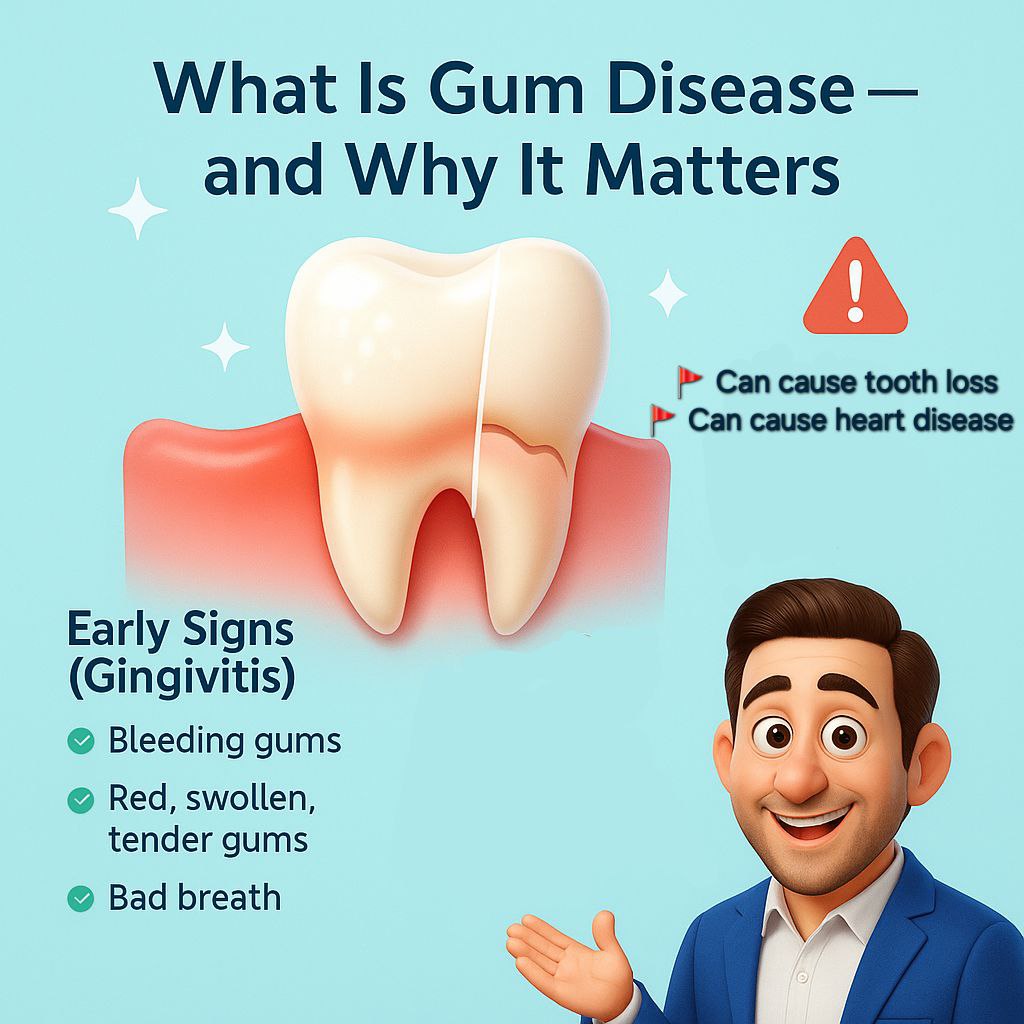
Are bleeding gums a sign of gum disease?
Bleeding gums are the primary clinical sign of gingivitis, which is the earliest stage of gum disease. Normally, healthy gums do not bleed with normal brushing or flossing. When they do bleed, the tissue is inflamed, which means disease is present, even if it is early and reversible.
The key distinction is that bleeding alone does not indicate how advanced the disease is. A patient with mild gingivitis and a patient with early periodontitis may both experience bleeding when they brush. The difference between the two, whether the bone supporting the teeth is involved or not, requires clinical exam and pocket depth measurements to determine. That is why bleeding gums warrant a dental evaluation, not just a change in toothpaste.
The scale of the underlying disease is real. The CDC estimates that nearly 50 percent of adults over age 30 show signs of periodontitis. Most of them had bleeding gums as the first visible sign, often for months or years before any other symptoms developed. Patients who dismiss bleeding gums as normal become the opportunity for early treatment that is not taken.
What is the difference between gingivitis and periodontitis?
Gingivitis is an early, reversible form of gum disease. Bone loss has not yet begun. At this stage, the gums are red, swollen, and bleed easily. Still, the bone supporting the teeth is intact. With professional cleaning and improved home care, gingivitis resolves completely. The tissue returns to its healthy state with no permanent damage. This is the stage at which treatment costs the least, takes the least time, and produces the best outcome.
Periodontitis is gum disease that has reached the bone. Specifically, bacteria have spread below the gumline into the space between the tooth root and surrounding bone. Gum pockets deepen past the healthy 1 to 3 millimeter range. Over time, the bone begins to break down. Unlike inflamed gum tissue, bone does not regrow once it is gone.
The American Academy of Periodontology classifies periodontitis into four stages based on bone loss and complexity. Stages I and II usually respond well to scaling and root planing, the deep cleaning that treats below the gumline. Stages III and IV involve serious bone loss, tooth mobility, and often require surgery.
In practice, the shift from gingivitis to periodontitis is not always obvious. Both conditions cause bleeding. However, periodontitis may also produce bad breath and some gum recession, but neither symptom reliably tells you which condition you have. So the only way to know is to have pocket depths measured at a dental visit.
I tell patients directly: the appointment they skip to save time is the one that determines whether the next step is a cleaning or a surgery. For the full breakdown of how dentists stage and treat periodontitis, see Everything About Periodontitis You Should Know.
How do you stop bleeding gums?
To stop bleeding gums, you need to remove the bacterial source that is driving the inflammation. That happens through a combination of professional cleaning to remove calculus that home care cannot reach, and consistent home care to prevent new calculus from forming. The two are not interchangeable. One without the other produces incomplete results.
Professional cleaning and scaling
For patients with gingivitis, a professional cleaning removes the calculus that has accumulated at and below the gumline. Calculus cannot be removed by brushing or flossing. Once plaque mineralizes, only professional instruments dislodge it. After calculus is removed, the bacterial irritant driving the inflammation is gone. The gum tissue begins to heal. Bleeding typically stops within 7 to 14 days of a thorough cleaning combined with improved home care.
When gum disease has reached the bone, scaling and root planing is the right treatment. This deep cleaning goes below the gumline into periodontal pockets. During treatment, the dentist cleans the root surface and removes the bacterial toxins that have worked into the tissue. The treatment uses local anesthesia and usually takes two to four appointments. It does not reverse bone loss, but it does stop progression and reduces pocket depths in most patients. For more on when you need a deep cleaning, see What Is a Dental Deep Cleaning and Is It Necessary?
Daily brushing method
Brushing method matters more than frequency. Use a soft-bristle brush at a 45-degree angle toward the gumline, with small circular motions. This removes plaque at the gum margin without damaging the tissue.
By contrast, hard bristles and scrubbing cause recession and tissue damage over time, which makes gum problems worse rather than better. In general, electric toothbrushes with oscillating or sonic heads clean better at the gumline than manual brushing, especially for patients whose technique is inconsistent.
Flossing — more frequently, not less
When gums bleed during flossing, the instinct is to stop. That is the wrong response. In short, bleeding means plaque has inflamed the tissue between teeth, and flossing is the only tool that reaches that area.
Regular daily flossing breaks up the plaque before it hardens, lowers the bacterial load, and lets the tissue recover. In most patients with early gingivitis, regular flossing cuts bleeding significantly within 1 to 2 weeks. Stopping flossing removes the only thing that would fix it.
Antimicrobial rinses
By prescription, chlorhexidine gluconate, is the most well-studied antibacterial rinse for gingivitis. Used regularly, it cuts oral bacterial counts meaningfully. Dentists typically prescribe it for two to four weeks after a cleaning. Long-term use causes staining and altered taste, so short courses work best.
Over-the-counter alcohol-free rinses, however, offer a milder bacterial reduction and work well for ongoing maintenance. In contrast, alcohol-based mouthwashes dry out the tissue and offer no real benefit over the alcohol-free versions for gum disease.
Nutrition and vitamin deficiency
Vitamin C shortage directly weakens gum tissue by impairing collagen production. The tissue loses strength and becomes more vulnerable to bacterial damage. Research in the National Library of Medicine links low vitamin C intake to higher periodontal disease risk. Patients with bleeding gums who eat few fresh fruits and vegetables are worth evaluating for nutritional shortage.
Beyond vitamin C, omega-3s reduce gum inflammation, and low vitamin D levels connect to higher rates of periodontitis through effects on immunity and calcium absorption. Diet alone is not a replacement for professional care, but it is a contributing factor that matters.
Can receding gums grow back?
No. This is one of the most important clinical facts about gum disease that patients do not hear clearly enough. Once gums recede, that tissue does not grow back naturally. The gum margin that has pulled away from the tooth root does not return to its original position through brushing method changes, natural remedies, or improved home care alone.
What good care can do is stop recession from getting worse. A patient who catches early recession and addresses the cause, whether gum disease, aggressive brushing, or bite-related forces, can stabilize the recession at its current level and prevent additional loss. That is clinically significant and worth pursuing. But it is not the same as reversal.
When recession exposes root surfaces, causing sensitivity, appearance changes, or risk to the tooth, gum grafting is the right treatment. The treatment uses donor tissue, typically from the palate, to cover the exposed root. It restores coverage, reduces sensitivity, and protects the root from further loss and decay.
While grafting is surgical and requires recovery time, But it is the only treatment that restores what recession has removed. The decision to graft or monitor depends on how much recession is present, how fast it is progressing, and whether the exposed root is causing symptoms or risk to the tooth.
Do natural remedies help bleeding gums?
Several natural remedies have research supporting their role as adjuncts to professional care. However, none of them replaces professional cleaning for patients with established calculus or active gum disease. The distinction between adjunct and replacement is clinically important. Patients who substitute natural remedies for professional care while disease progresses have worse outcomes than those who do nothing, because they delay treatment while feeling they are addressing the problem.
For example, saltwater rinses have antibacterial properties and support healing tissue. Simply dissolve a teaspoon of salt in eight ounces of warm water, rinsed gently and allowed to drain passively rather than swirled forcefully, reduces oral bacterial load without the side effects of chemical rinses. They work well for daily use as a supplement to brushing and flossing.
Oil pulling, which involves swishing about a tablespoon of coconut oil of oil for 10 to 15 minutes, has shown in multiple peer-reviewed studies to reduce plaque scores and gingivitis markers after 1 to 2 weeks of consistent use. The mechanical action of swishing combined with the antimicrobial properties of lauric acid in coconut oil contribute to the effect. Still, it is not a substitute for brushing or flossing, but it is a legitimate adjunct for patients who are already doing both.
Regular green tea consumption has documented anti-inflammatory and antioxidant effects that show measurable reduction in periodontal inflammation markers in research settings. Similarly, turmeric contains curcumin, which has anti-inflammatory properties, and limited research supports its topical use as a gel for gingival inflammation. Aloe vera gel applied topically to inflamed gum tissue has shown anti-inflammatory effects in small clinical studies. In short, these are reasonable lifestyle additions. But none of them removes calculus, closes periodontal pockets, or arrests bone loss in established periodontitis.
What does gum disease treatment cost in the Boston area?
As with most dental conditions, treatment costs rise with disease severity. A routine cleaning for gingivitis costs $150 to $250, and most insurance covers it at 100 percent twice per year. Scaling and root planing for periodontitis runs $300 to $800 per quadrant and is partially covered under most PPO plans. Gum grafting usually costs $700 to $1,500 per site and insurance may partly cover it when the tooth needs protection.
In short: treating gum disease earlier costs less, takes less time, and preserves more. For more on how insurance covers periodontal treatment, see How Dental Insurance Actually Works (And What It Won’t Cover).
| Treatment | Boston area cost | Typical insurance coverage | When indicated |
|---|---|---|---|
| Preventive cleaning (cleaning) | $150–$250 | 100% twice per year | Gingivitis, healthy gums |
| Deep cleaning (scaling and root planing) | $300–$800 per quadrant | Partially covered under periodontal benefit | Periodontitis (pocket depths 5mm+) |
| Gum grafting | $700–$1,500 per site | Partially covered if medically necessary | Significant recession with exposed root |
| Periodontal maintenance | $150–$250 | Covered at 3–4 month intervals for treated periodontitis | After deep cleaning, ongoing management |
The cost comparison between prevention and treatment in gum disease follows the same pattern as other dental disease: a regular cleaning that prevents gingivitis from progressing costs a fraction of the deep cleaning required once it becomes periodontitis, which costs a fraction of the grafting required once recession becomes significant. The financial logic of early treatment is consistent at every stage.
Is gum disease linked to other health conditions?
Yes, and the research base is substantial. The American Heart Association has published a scientific statement confirming an link between periodontal disease and heart disease risk through shared body-wide inflammation pathways. In fact, patients with untreated periodontitis show higher rates of heart events than those with treated or healthy gums. The mechanism is the chronic systemic inflammation burden produced by a persistent bacterial infection in the gums.
Diabetic patients face a two-way relationship with gum disease: elevated blood sugar accelerates periodontitis progression, and active periodontal infection worsens glycemic control. Importantly, treating gum disease in diabetic patients produces clear improvements in HbA1c levels. Periodontitis has also been linked to adverse pregnancy outcomes including preterm birth and low birth weight, making periodontal evaluation an important component of prenatal care.
These links do not mean that treating gum disease cures heart disease or reverses diabetes. They mean that untreated gum disease contributes to a systemic inflammatory environment that worsens multiple chronic conditions simultaneously. So treating it is not just oral health care. It is systemic health care.
Frequently asked questions about bleeding gums
Can receding gums grow back?
No. Once gums recede, that tissue does not grow back on its own. Better home care and regular cleanings can stop recession from getting worse further, but they do not restore tissue that has already been lost. Gum grafting is the only treatment that restores coverage to exposed root surfaces. The decision to graft versus monitor depends on the severity of recession and whether the exposed root is producing symptoms or risk to the tooth.
How long does it take to reverse gingivitis?
With professional cleaning and consistent home care, gingivitis usually improves within 7 to 14 days. In fact, bleeding that was occurring with every brushing session often stops within 1 to 2 weeks of calculus removal and improved plaque control. Importantly, gingivitis is fully reversible at this stage. The gum tissue returns to health with no lasting damage. Periodontitis, by contrast, involves bone loss that does not reverse.
Should I floss if my gums are bleeding?
Yes. Specifically, bleeding gums are a sign that you need to floss more, not less. The bleeding shows inflamed tissue from plaque accumulation between teeth, the area only flossing reaches. Consistent daily flossing removes that plaque, reduces the inflammation, and the bleeding stops within 1 to 2 weeks. Stopping flossing because it causes bleeding removes the treatment that would resolve it.
What causes bleeding gums?
Simply put, the main cause is plaque buildup at the gumline that has not been adequately removed by brushing and flossing. Bacterial byproducts in plaque trigger inflammation in the gum tissue, making it swollen and prone to bleeding on contact. Secondary causes include smoking, vitamin C shortage, hormonal changes during pregnancy, certain medications, and aggressive brushing with a hard-bristle brush.
Is gum disease linked to heart disease?
Yes. The American Heart Association has confirmed an link between periodontal disease and heart disease risk through body-wide inflammation. Chronic bacterial infection in the gums produces inflammation markers that contribute to heart disease processes. Patients with untreated periodontitis have higher rates of heart events. Treating gum disease reduces the systemic inflammation burden, which is relevant to overall heart health.
Bleeding gums at the early gingivitis stage are reversible with professional cleaning and improved home care. At the periodontitis stage, treatment becomes more involved and bone loss becomes permanent. The earlier the treatment, the simpler and less costly the path back to healthy gums. Schedule an evaluation at our Waltham office or call 781-487-1111.
Serving Waltham, Newton, Brookline, Wellesley, Needham, Lexington, Cambridge, and Greater Boston.
Dr. Charles Sutera, DMD, FAGD, practices cosmetic and preventive dentistry at Aesthetic Smile Reconstruction in Waltham, Massachusetts. He specializes in comprehensive preventive care, periodontal disease management, TMJ treatment, and sedation dentistry for patients throughout Greater Boston.
This article provides general educational information and is not a substitute for professional dental evaluation. Individual needs vary. Schedule a consultation for personalized recommendations.
