By Dr. Charles Sutera, DMD, FAGD Board-Certified Sedation Dentist | Serving Greater Boston for 18+ years Last Updated: October 9, 2025
Introduction: When “Healing” Still Feels Tender
The swelling is down. You’re eating soft foods again. But now it’s day 10 — and your mouth feels different. A dull ache lingers, the gum looks pale, maybe there’s even a strange taste.
Shouldn’t it be over by now?
Not quite. The second week after tooth extraction is the most overlooked phase of recovery — the point where your body quietly transitions from surface repair to deep tissue and bone healing.
In my Waltham dental practice, I often hear from patients who think something’s gone wrong when, in fact, their mouth is healing exactly as it should.
This guide explains what happens during week two after an extraction, what’s normal (and what’s not), and how to keep your recovery smooth and pain-free.
📍 Serving Waltham, Newton, Brookline, Wellesley, and Greater Boston since 2011.
Week Two: What’s Actually Happening Inside Your Mouth
Tooth Extraction Week 2: The Deep-Healing Stage
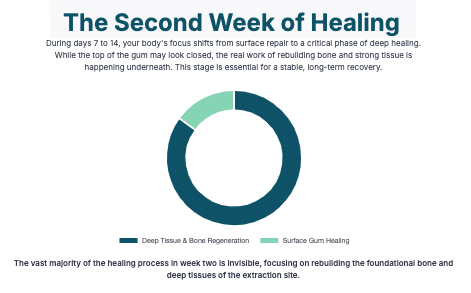
In the first week, your body forms a blood clot and begins sealing the gum surface. By the second week after extraction, the clot has matured into granulation tissue — a mix of new blood vessels, collagen, and connective tissue.
Below the surface, bone cells begin to fill the socket. The gum may look lighter or even whitish — this is healthy new tissue, not infection.
At this point, the wound is closed on top but still fragile underneath. You might feel mild tenderness or pressure as the bone starts remodeling — completely normal signs that deep healing is underway.
Boston note: Many patients from Newton and Brookline call our Waltham office around day 12 wondering why their gums “itch” or feel “tight.” That sensation is actually new tissue forming — a positive healing milestone.
What’s Normal During the Second Week After Tooth Extraction
Every patient heals at their own pace, but these sensations usually mean your recovery is on track:
✅ Normal Week 2 Symptoms
Mild tenderness or stiffness around the site
Slight gum itchiness or tingling (tissue regeneration)
Light bleeding when brushing nearby teeth
Dull ache radiating toward ear or jaw
Faint taste or odor from tissue breakdown
White or yellowish film over the socket (granulation tissue)
Example: A Waltham patient came in worried about a “white patch” on day 11. It turned out to be granulation tissue — a healthy sign of gum repair, not infection.
Healing after extraction happens in stages — and during week two, the bone beneath the gum starts regenerating. This can cause dull, achy pressure similar to sinus pressure or mild earache.
Other possible sensations include:
Tightness near the jaw joint (TMJ tension)
Soreness from favoring one side when chewing
Tingling as nerve endings reconnect
Newton patient story: One patient described her jaw feeling “bruised” on day 14. Imaging showed normal bone growth — the ache resolved naturally within a few days.
Usually not. A pale or white appearance is granulation tissue, a healthy part of healing. Infection typically looks red, swollen, or has drainage.
“I still feel pressure — is that normal?”
Yes. As the socket fills with new bone, mild pressure or dull ache is expected. It should steadily lessen over the next week.
“Why does food get stuck?”
The gum surface is still reshaping. Use gentle saltwater rinses to clear debris — never poke with fingers or utensils.
“Can I start exercising again?”
Light activity is fine, but avoid heavy lifting or high-intensity workouts until pain-free. Strain can raise blood pressure and cause minor bleeding.
Waltham advice: At our practice, we recommend resuming normal diet and gentle movement during week two — just avoid extremes like running or spicy foods until the site feels stable.
How to Care for Your Extraction Site in Week Two
1. Keep Rinsing — But Gently
Use warm saltwater (½ tsp salt in 8 oz water) twice daily. Swish softly, don’t spit forcefully.
2. Brush and Floss Carefully
Clean other teeth normally but brush near the site with a soft-bristle brush. Don’t press directly on the extraction area yet.
3. Eat Smart
Start reintroducing foods like pasta, eggs, and soft vegetables. Avoid crunchy, spicy, or acidic items that can irritate gums.
4. Stay Hydrated
Dryness slows tissue repair. Sip water throughout the day and avoid alcohol or caffeine in excess.
5. Manage Minor Discomfort
Over-the-counter ibuprofen or acetaminophen is safe if cleared by your dentist. Avoid aspirin (it may cause bleeding).
6. Keep the Area Clean
If your dentist provided a syringe or special rinse tool, begin using it around day 7–10 to clear debris gently from the socket.
The Boston Takeaway: Healing Isn’t Over — It’s Just Deeper
By week two, your extraction site is finally strong enough for real repair. While mild soreness or odd sensations can feel concerning, they’re often signs of progress.
Trust your body’s timeline. Continue gentle care, stay hydrated, and call your dentist if anything feels off.
In the Greater Boston area, we see hundreds of patients each year at this exact stage — worried that something’s wrong, when they’re actually healing perfectly.
If your symptoms worsen or you’re simply unsure, scheduling a brief follow-up can provide instant peace of mind.
Schedule Your 2-Week Extraction Checkup
📍 Serving Waltham, Newton, Brookline, Wellesley, and Greater Boston
If you’re in your second week after tooth extraction, we’re here to make sure everything’s healing exactly as it should.
Your checkup includes:
Digital scan of the extraction site
Debris cleaning or socket irrigation
Comfort check and healing assessment
Guidance on next steps (bone graft, implant, etc.)
Dr. Charles Sutera is a nationally recognized sedation and cosmetic dentist known for advanced surgical care and anxiety-free patient experiences.
Credentials:
FAGD (Fellowship, Academy of General Dentistry)
Certified IV Sedation Dentist
Member, American Dental Association (ADA)
Over 15 years serving Greater Boston communities
Philosophy:
“True healing isn’t just about closing a wound — it’s about restoring comfort, function, and confidence.”
FAQ: The Second Week After Tooth Extraction
Is it normal to have pain the second week after tooth extraction? Yes. Mild soreness or pressure is common as bone and tissue regenerate. Sharp or worsening pain should be evaluated by your dentist.
Can you get dry socket in week two? Rarely. Dry socket usually appears within the first 3–5 days. Pain that develops later often stems from debris or mild infection.
Why does my extraction site look white? That’s granulation tissue — a healthy layer of healing cells, not pus. It will darken to pink as it matures.
When should I see my dentist again? A follow-up around days 10–14 helps ensure proper bone healing and early detection of infection or dry socket.
🏥 Medical Disclaimer
This content provides educational information about tooth extraction healing during week two. It does not replace personalized dental care. If you experience severe pain, swelling, or fever, contact your dentist or oral surgeon immediately.
Charles Sutera DMD, FAGD is a nationally acclaimed dentist known for high profile smile makeovers, complex TMJ treatment, and IV sedation dentistry for the most dental phobic patients in the country.
He was one of the youngest dentists to achieve the FAGD award, a lifetime achievement award that only 6% of all dentists accomplish.
He is a patented developer of dental products used in the healthcare industry and serves as a dental legal adviser for law firms across the globe.
His practice, Aesthetic Smile Reconstruction, is located in the metro Boston area. The practice is known for a VIP experience and was the first to publicize the concept of cinema-style operatories for patient comfort.
Dr. Sutera has been featured in numerous national publications, radio, and TV appearances.